PARIEDOLIA
  • Home
  • EXEGESIS
  • NIMH
  • CONTACT

BattleTech History - Prelude

9/9/2018

2 Comments

 
Picture
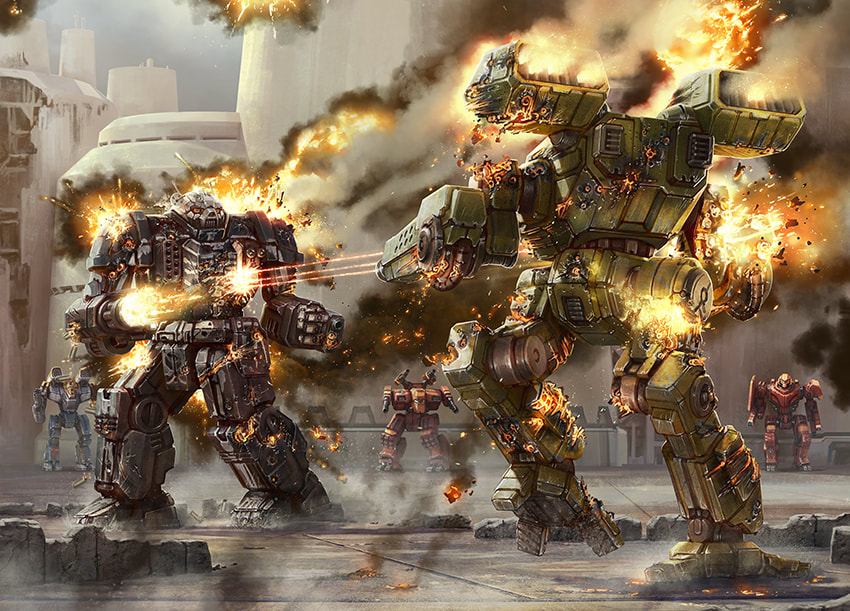
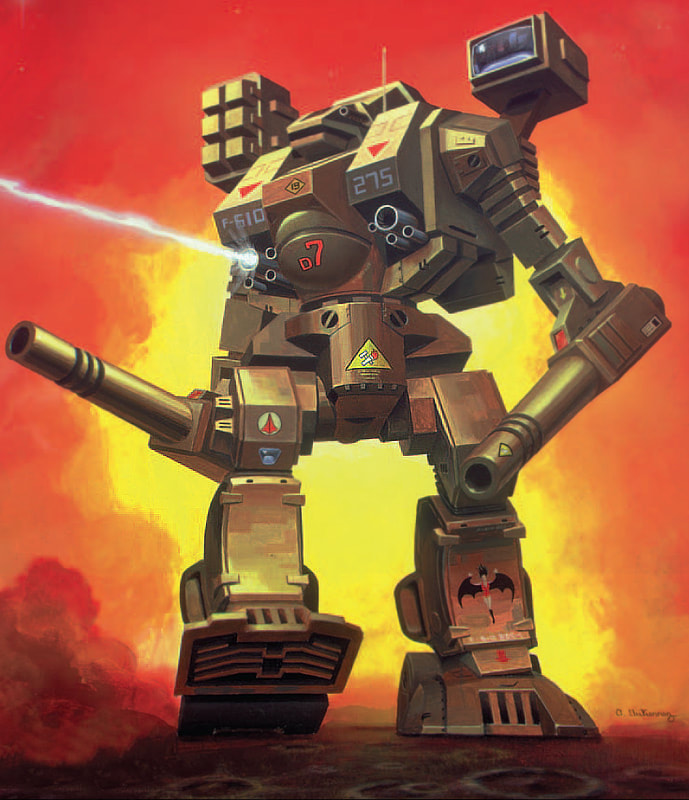
​Before BattleTech, and largely afterwords, the mecha genre has been defined as a genre exclusive to Japanese anime. BattleTech established a uniquely Western iteration of this concept, based on alternate history, hard and speculative science, and pseudo-realistic extrapolations of military and social history. No adolescent pilots, mysticism, psionics, or superheroic individuals personally winning intergalactic wars. It's a humanocentric setting, with no extraterrestrial humanoids or competing intelligent alien civilizations. 

Most iconically, the mechs of BattleTech are not the agile, energy sword-wielding, robot ninja mecha of the majority of anime. They are essentially futuristic tanks, lumbering weapon platforms that serve a specific tactical function. Though their imposing presence dominates the battlefields of the BattleTech universe, they are part of a larger military combined arms approach.
Picture
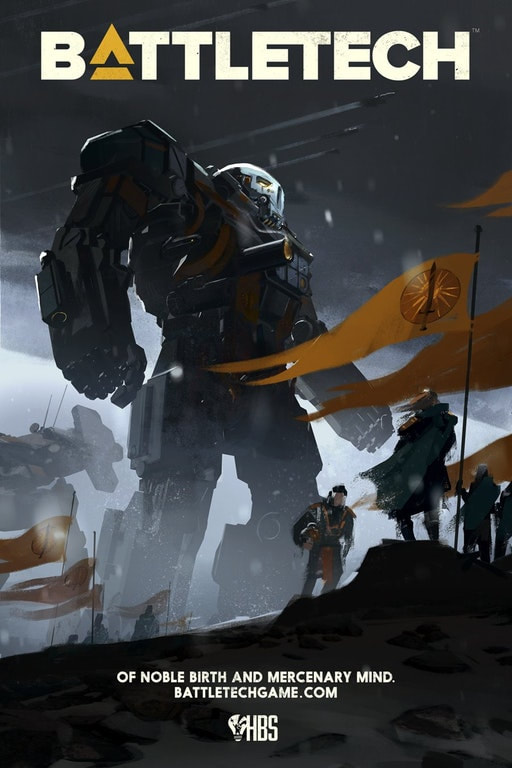
​BattleTech history is divided into 6 Eras, with sub-divisions usually made regarding large scale conflicts. 

I. The Star League (2005-2780) - the alternate history of the BattleTech universe diverges just before this point, and this is the era of colonization of the stars and mankind's exodus from Earth (renamed Terra) following the discovery of FTL travel. One man eventually rises to rule over thousands of planets in the golden age of science and invention. An intergalactic empire is built, and then falls. This is the era where mechs are invented, and the political allegiances that would define the coming centuries are founded.

II. The Succession Wars (2781 - 3049) - After the fall of The Star League, there comics are period of almost undending war as the 5 great houses of the Inner Sphere struggle for dominance. The universe enters a technological dark age, as most of the advancements of the prior age are lost, and societies descend into a pseudo-feudal conditions. This is the default setting of the original BattleTech game.

III. Clan Invasion (3050 - 3061) - The Clans invade from deep space from beyond the Periphery, throwing the Inner Sphere into chaos. Their technology is far advanced, their mechs stronger, more adaptable. A common enemy brings the Inner Sphere together.

IV. Civil War (3062-3067) - A politically motivated unconventional war burning hot and cold that mainly involves two of the largest Inner Sphere Houses, though eventually almost all the Inner Sphere and some of the Clans are drawn into the conflict.

V. Jihad (3068-3080) - A splinter group of religious fanatics called the Word of Blake wages a war for technological superiority that threatens to destroy the newly-formed Star League from within.

VI. The Dark Ages (3081 - ) - The setting for the Mechwarrior Clix game. As the tabletop game hasn't caught up to this (they were originally under license not to touch it), I'll largely be ignoring this. The associated fiction is generally considered substandard.

I'm going to start from the beginning here, where the history of the BattleTech universe diverges from our own, and work my way through up to the Jihad. Obviously, after over 30 years of fiction and fluff, I won't be covering anything in detail, but just giving a broad overview for anyone new to the setting to gain a toehold. Most players tend to pick a favourite period and stick with it, and for me that's probably always going to be The Succession Wars. 

After that I'll cover the game itself, the various options and resources available, the best sourcebooks and manuals, and good entry points for new players.
2 Comments

BattleTech Real World History-Epilogue

9/5/2018

0 Comments

 
Picture
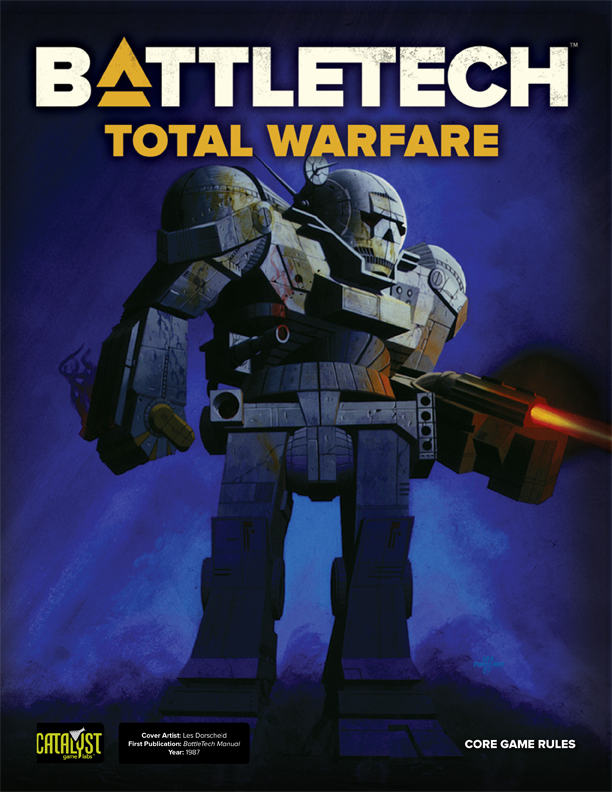
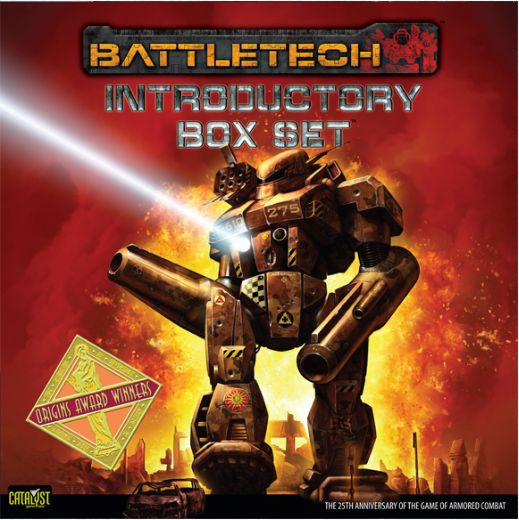
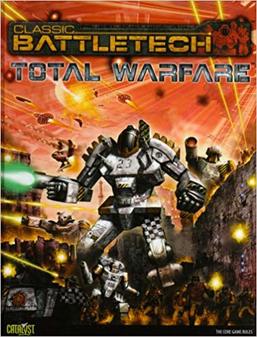
At Gencon this year Catalyst revealed the new Introductory and Starter boxes for BattleTech coming to retail in the next month or so, as of this writing (as detailed in the first post in this series), along with a new printing of Total Warfare featuring a classic art piece for the cover that is much better than the previous cover art (as I said before, while I think Catalyst's products are top notch, their covers in the past tended to leave a lot to be desired artistically)
Picture
This may be one of my favourite BattleTech covers overall. Simple and effective. I love the Atlas, and the way this image evokes its imposing presence. This may be the work of Catalyst's new art director, Anthony Scroggins, appointed on March 29th of this year. If so, big kudos to Scroggins and I hope this is indicative of what we can expect from him in the future.

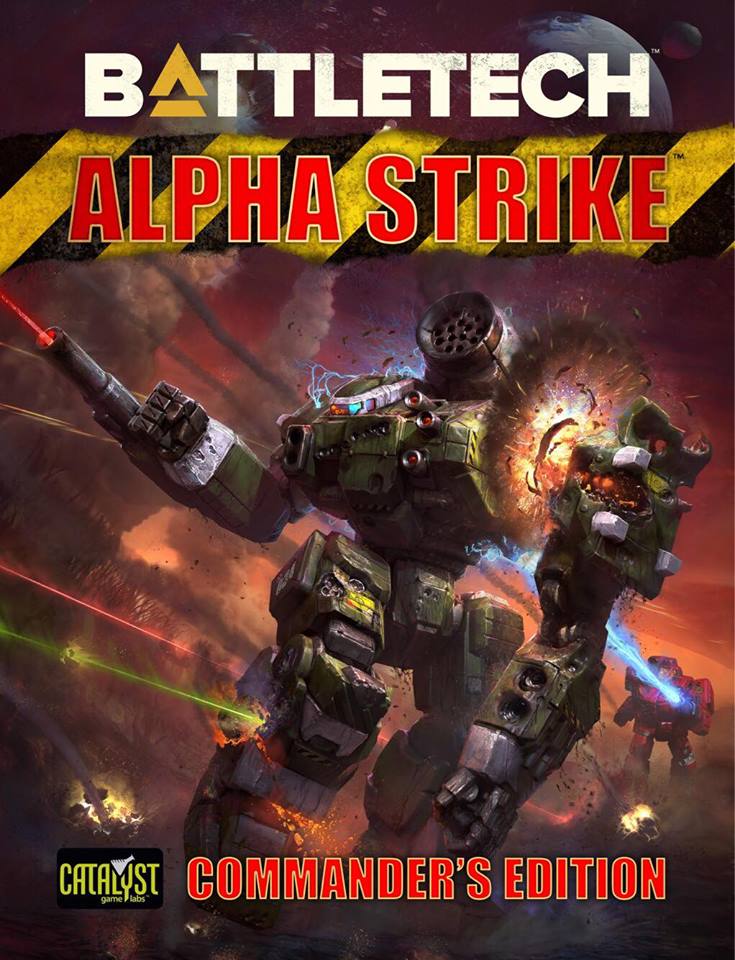
Also on the horizon, but with no set release date as of yet, is another product I'm eagerly anticipating, BattleTech: Alpha Strike Commanders Edition.
Picture
I'll have a lot more to say about Alpha Strike coming up. For now, lets talk about what Catalyst's been up to the last 8 years, since their "Crisis of Treachery"...

er, no, sorry, that was Palladium
(https://en.wikipedia.org/wiki/Palladium_Books#Embezzlement_case_and_financial_difficulties)

...the company that published the Robotech RPG!
Picture
Anyways, the previous boxed set released by Catalyst was the 25th Anniversary Edition in 2011....
Picture
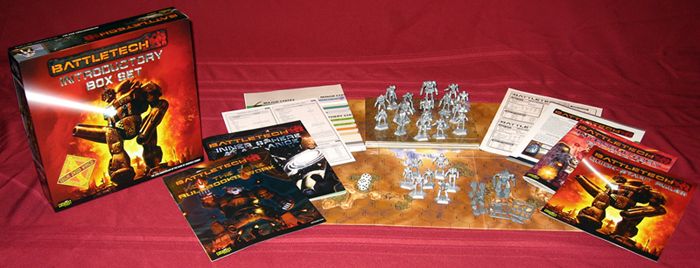
This was very similar to the previous boxed set by Catalyst, containing:
  • A 12-page full-color quick-start rulebook
  • 36-page book of pre-generated BattleMech Record Sheets
  • 80-page full-color rulebook
  • Inner Sphere at a Glance, a 56-page full-color book of universe background and BattleMech technical data
  • 16-page full-color Painting and Tactics Guide
  • A heavy-duty card of compiled tables
  • and 2 18″ x 24″ game-board quality reversible hex maps
  • along with 24 plastic miniatures
  • as well as 2 "premium-quality plastic BattleMech minis"
Picture
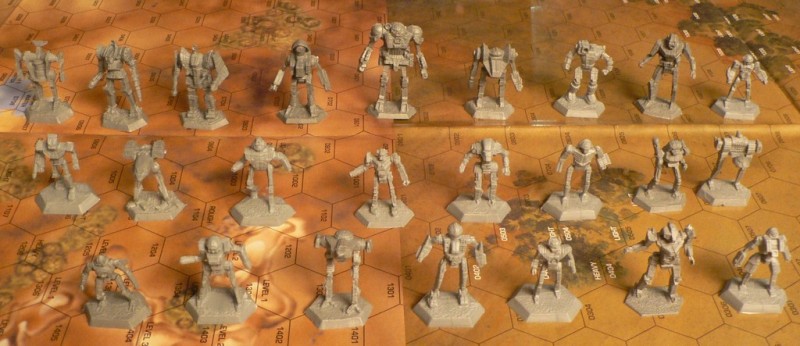
​From what I understand, the 2 "premium quality" minis were cast in resin, and done in 10mm (as opposed to the standard 6mm) scale. In other words, more collector's pieces than intended for play.
Picture
​Interestingly, this scale means they are roughly the equivalent size of the TCI model kits included in the Battledroids boxed set...
Picture
The 25th Anniversary boxed set retailed for $49.99 usd, though it has sadly been out of print since 2012, and complete copies fetch prices upwards of $300 on the secondary market. Looking at first, the amount of miniatures included, and second, the price point, one might be inclined to less enthusiasm regarding the new boxed set slated for 2018 release. Only 8 miniatures, at ten dollars more. But the 25th Anniversary was a loss-leading product, meaning that each copy sold at a loss to Catalyst, in the hopes that it would attract new players to the game and make up the costs in the sale of supplementary products. This is why it was allowed to go out of print so quickly.

The new boxed set was specifically intended to be financially sustainable, so that it can remain in print as a gateway product for new players.
Additionally, it should be noted that the 25th Anniversary set was plagued by quality control issues. "Catalyst Game Labs has started a broken model replacement program for box sets with damaged or missing contents, particularly the plastic miniatures which are often damaged, miscast, or incomplete."
​ (http://www.sarna.net/wiki/25th_Anniversary_Introductory_Box_Set)

From reviews of the new boxed sets from those lucky enough to acquire early copies at Gencon, the miniatures are of much higher quality and beautiful new sculpts.
Picture
Picture
​Catalyst has , numerous times, attempted to broker a deal with Harmony Gold so that The Unseen can be "Seen Again." They at one point finally seemed to have achieved some sort of accord, and when the BattleTech: 25 Years of Art and Fiction commemorative book was released in 2009, the preliminary pdf copies contained the first images of The Unseen in an official publication since '96. 
Picture
​Unfortunately, whatever deal had been made fell through at the last moment, and print copies of the book had the Unseen artwork removed. Perhaps out of exasperation, Catalyst finally decided upon a bold move. In 2015 Catalyst unveiled the "Reseen", redesigned artwork and designs for Unseen mechs that differed sufficiently from their original depictions that they could be used without violating the legal settlement with Harmony Gold.

This was an incredibly controversial decision for several reasons. Most notably, this was one of the only examples of a retcon in BattleTech's continuity. One of the unique aspects of BattleTech is that the lore has remained substantially unchanged since the second edition boxed set. Unlike, for example, Warhammer 40K, where multiple revisions to setting and history are common with every edition, with such a vast cumulative alteration to the setting over the years that the universe of Rogue Trader is nearly unrecognizable in comparison to the current (eighth edition) of 40K (Games Workshop has even gone back and edited old Warhammer novels and short stories before re-releasing them). Contrast this with BattleTech, where a sourccebook or novel released in the late 80s is just as viable and a reliable source of information as one released in the last year. They'll go back and clarify and expand, but for the most part BattleTech has a consistent history, and even the few contradictions that occasionally pop up over 30 odd years between hundreds of authors, are easily explained as the natural occurring conflicting information and misinformation from frist person perspectives of characters in the fictional history (the vast majority of BattleTech sourcebooks are presented as in-universe accounts and historical documents).

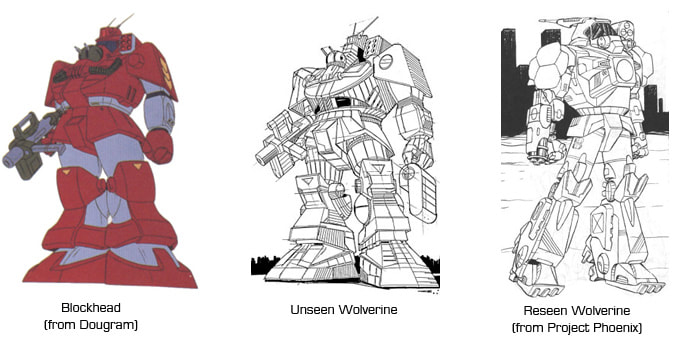
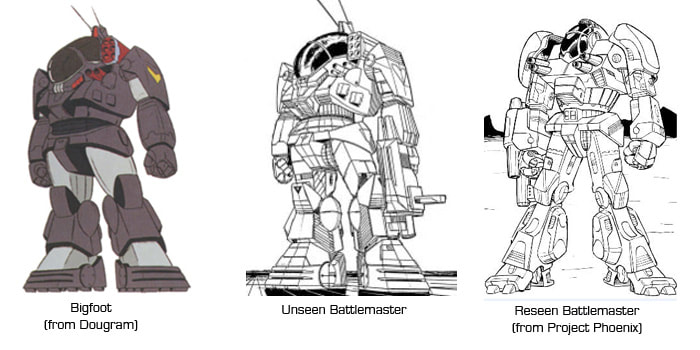
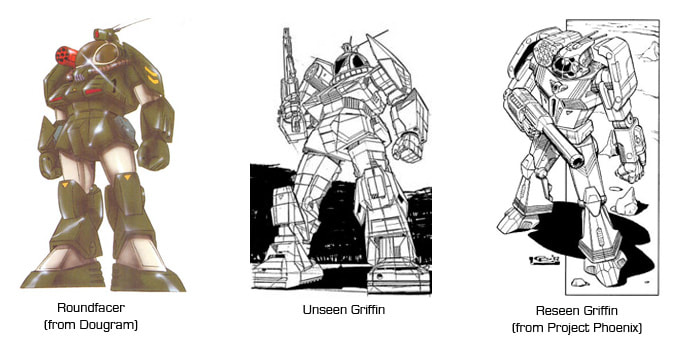
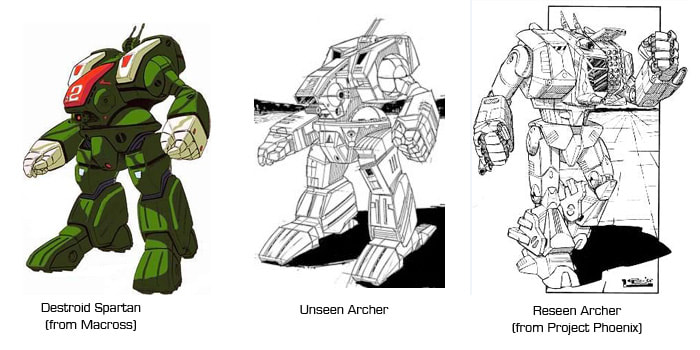
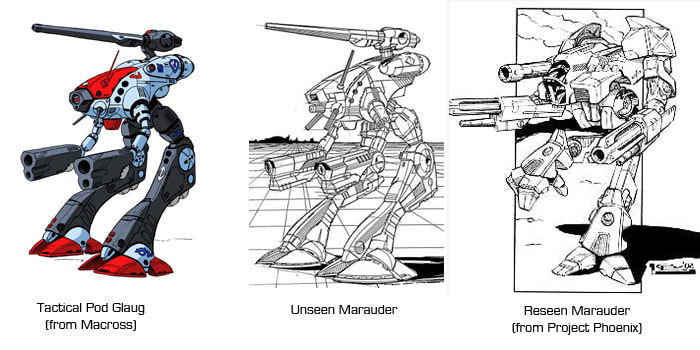
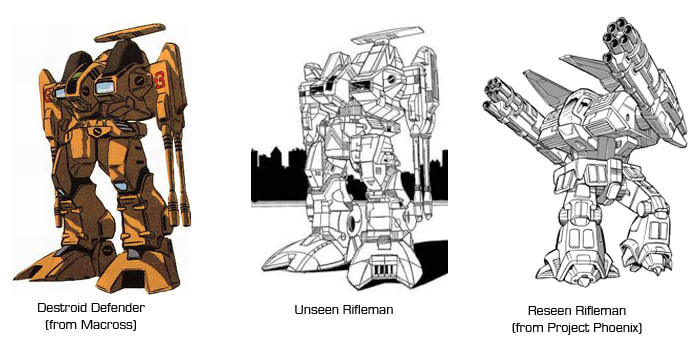
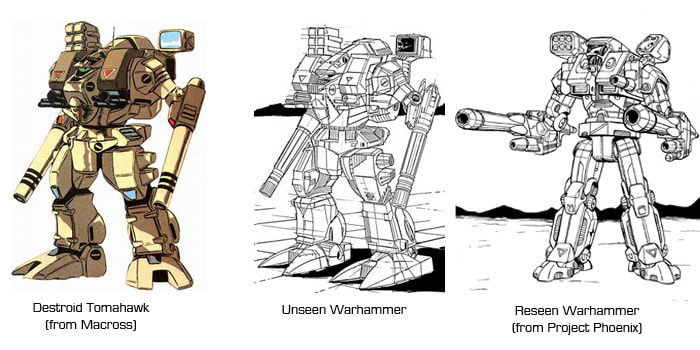
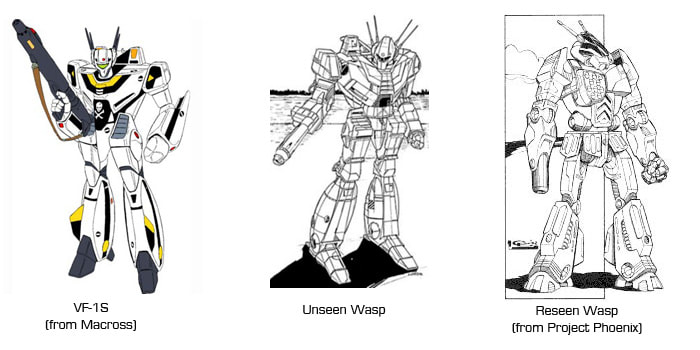
This is one of the reasons BattleTech has sustained a devoted core audience for years. And brings us to the second primary reason the Reseen are controversial - many players still own the original products featuring The Unseen, and regardless of the copyright void they've existed in for years, they remain a core part of the BattleTech experience for many. Moreover, and though this is largely opinion, the Reseen designs simply aren't on par with the originals. But I'll let readers judge for themselves on this:
Picture
Picture
Picture
Picture
Picture
Picture
Picture
Picture
Coming up next...BattleTech: History! By that I mean, this time I'll be going through the fictional history of the BattleTech universe. 
0 Comments

BattleTech Real World History The End

9/3/2018

1 Comment

 
Picture

Prelude To Disaster

We've got a  lot of ground to cover here, and to begin with, we need to briefly return to the past...
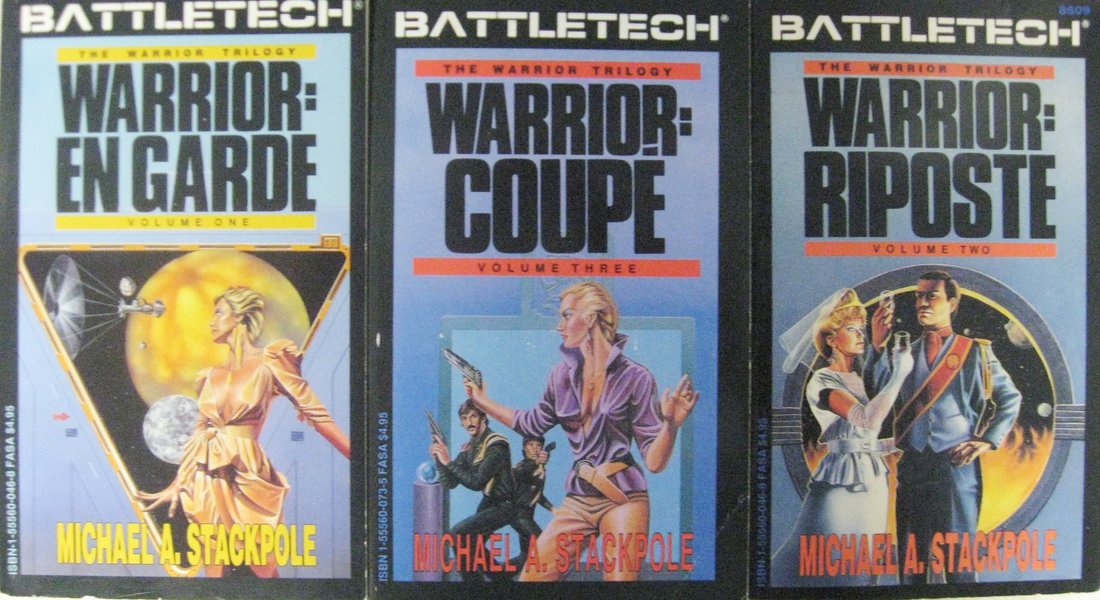
​When I began this series, I glossed over the BattleTech novels. But these were a significant part of the fandom, and BattleTech's success. More than a hundred published, several of which hitting the New York Times Best Sellers list, and translations into 15 languages. The BattleTech novels defined the BattleTech universe, as much as any game or sourcebook. The BattleTech novels were originally published by FASA until 1991, when ROC Books took over the line, reprinting many of the earlier novels. 

Of the many writers who contributed to this corpus, Michael A. Stackpole's books are held in especially high regard. His Warrior and Blood of Kerensky trilogies are considered the backbone of the BattleTech universe's lore. 
Picture
I first knew of Stackpole, not from his novels, but from The Pulling Report, an incredibly in-depth exploration of Patricia Pulling's campaign against Dungeons & Dragons during the height of the Satanic Panic (http://limsk.tripod.com/pulling.htm).

From 1988 (Warrior: En Garde) to 1998 (Prince of Havoc), Stackpole wrote 12 novels and various short fictions for the BattleTech series. In 2007 he posted to his personal website (Stormwolf.com) an essay entitled "Last Call II" ("Last Call I apparently regarded his Star Wars EU novels). It seems that this essay was actually written substantially before '07, but I don't have access to any information as to where and when it was originally put online. 

Last Call II was subtitled "Why Prince of Havoc was my last BattleTech® novel" (yes, he included the "registered" sign). It involves his perception of FASA's business practices, in regards to freelance fiction writers. 
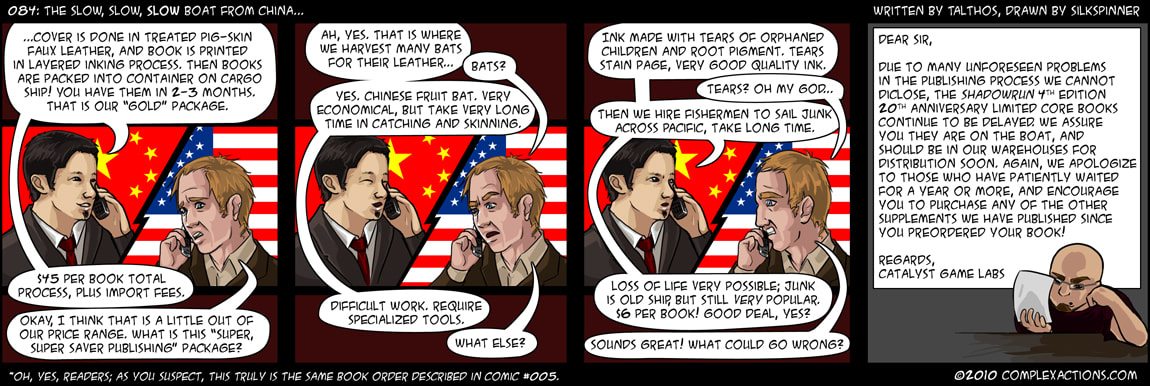
Several excerpts are quoted below. I highly recommend reading the essay in it's entirety @ http://www.michaelastackpole.com/?p=15

"I first started working with FASA on Btech novels in the summer of 1987, writing on the Warrior trilogy. FASA is a game company, and “game company” is pretty much synonymous with a company that is chronically underfunded and always in a tight cashflow situation. FASA has always been slow to pay and throughout my history with them has owed me money. When I needed money, I’d call and see what they could send. Back in the early days, when I had no health insurance, no house, no car payments, no IRA; getting $300 or $500 here and there was what I needed to get by.

This is not to say that FASA did not, at other times, get me some money and, for a long time, were diligent in getting me the advance money for books (without which they would not have gotten the books). In 1994, however, this situation changed because my circumstances changed. In 1994 I got my first Star Wars® contract and that provided enough of a cushion that I wasn’t having the cash shortages that made money from FASA a necessity for survival.

To FASA’s credit, it must be noted, they did offer to pay me advances for the reprints of the Kerensky books, and the new novels I’d done for them, despite their having cash flow problems. I happened to know, however, that there were other writers in their stable to whom they owed money, and that these guys had families and kids. Since I didn’t need the money, I repeatedly directed FASA to pay it to these other folks.

In 1996, when I needed money for the down-payment on a house, FASA did come up with $6300 very quickly for me, but aside from that payment, I got nothing from them between 1994 and 1999. By January of 1999, FASA’s own incomplete accounting of what they owed me totaled just shy $90,000.00. In fact, this total did not take into account foreign royalty payments that would have put the total over $100,000.00. With the sale of FASA Interactive to Microsoft, FASA did get a huge influx of cash and did wipe out the $90,000.00 debt they owed me.

By the summer of 1999, no royalties had been paid for book sales in the latter half of 1998. At that time I asked and was sent an accounting that showed FASA owed me about $6,000.00. I was told a check request had been sent in to accounting for payment. None was forthcoming; nor was there any word of explanation. Since FASA and Decypher were negotiating a buy-out I assumed payment was waiting for the deal to go through.

That deal collapsed. Still no payment, and no new royalty statements to reflect sales in the first half of 1999.

In early 2000 I got royalty statements from FASA that, because of a computer glitch, indicated that none of my books had sold a single copy in the whole of 2000. I pointed out to FASA that I refused to believe this. At the same time I pointed out that the royalty statements also did not cover foreign editions of books – copies of which I had sitting on my shelves.

FASA did an internal audit of accounts and uncovered a lot of foreign payments that had never been accounted to me, and presented a statement sheet showing that they now owed me $18,200.00; though that accounting omitted royalties for three books. Subsequent discussions with FASA about the royalty accounting program they use revealed that I’d actually been being underpaid on novels because of a change in the deal between FASA and ROC concerning how much FASA was being paid.

To my best estimate, FASA currently owes me in excess of $20,000.00. Not only is this a significant amount of money, but it’s my money. I appreciate the fact that it’s being used to cover payroll of folks I consider friends, but my payroll needs to be covered, too.

The Contract for Tide of Tyrants

Tide of Tyrants was the working title for the next book I was supposed to write for FASA. The Prince of Havoc contract offered me a 4% royalty and a $7500.00 advance. The Tide contract offered me a 3% royalty and an advance of $5500.00. This disturbed me for two reasons. First, I was very directly being told that despite having had five novels hit the New York Times Bestseller list, my work was some how worth less to FASA now than it had been before.

Second, the pay rate on the contract has to be looked at in context of what I get for work set in my own worlds. In my last original contract I had an 8% royalty, with a $30,000.00 advance for each of three books. Even at 4% and $7500.00 FASA was getting me at a bargain rate. The reduction of rates and payments was insulting and really rather silly, in light of the fact that they weren’t paying me anyway.

FASA’s editor and I did discuss and negotiate some alternative contract adjustments that would allow me to continue working on Btech, but these had to be taken to her bosses. Despite email sent to FASA subsequent to these negotiations to get a response, I heard nothing. Without a contract I wasn’t going do the work.

The lack of payment and an unsatisfactory contract, neither of these things was insurmountable. I’d worked that way with FASA for years. It did worry me that the slow-pay cycle had started again, while I saw no white-knight Microsoft deal looming to bring my accounts to balance. Even so, this too could have been worked around, but in combination with other factors, just made it apparent to me that it was time to cut my losses

."
Picture
​This story is, sadly, not at all uncommon in the gaming industry. If anything, it is unusual that FASA did...belatedly...pay their debts. Many game writers have not been so fortunate.
Despite this story (and the reason it was most certainly written long before the current date of posting), Stackpole did eventually return to write several BattleTech novels after FASA sold the IP.

"I've always said the rubber duck
​is a yellow catalyst." 

-​Florentijn Hofman
Picture
​Loren L. Coleman was another prolific BattleTech novelist starting in 1997 with Double-Blind. Coleman, along with his wife Heather, and former FASA staffers Randall Bills, Tara Bills, and Philip DeLuca, formed InMediaRes Productions (IMR) in 2003 specifically for the purpose of publishing new "Classic BattleTech fiction" (as opposed to the Mechwarrior Dark Age novels taking place in the setting of the Clix game). WizKids initially granted this license to IMR with a limitation set in place of short fiction up to 40,000 words.

This led IMR to create BattleCorps in '04, a subsciption-based service similar to an online magazine, offering new BattleTech fiction, scenarios, and in-universe news coverage. BattleCorps also offered a forum for subscribers to interact with the authors, along with the "BattleShop", an online store for purchasing pdfs of scanned OOP BattleTech books (with pictures of any "Unseen" removed).

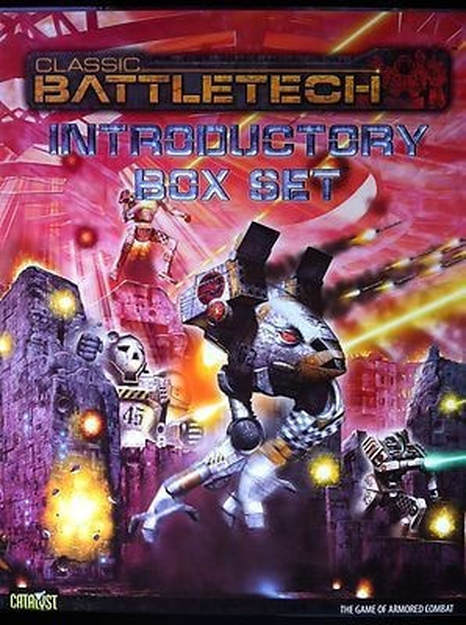
In 2007, with FanPro's license set to expire, InMediaRes was approached by WizKids (now owned by Topps) to take over production of the Classic BattleTech line. To this end, Catalyst Lab Games was created as a subsidiary imprint. This new license also lifted the restriction on only producing short stories, and in 2008 IMR began printing collections of short fiction that had appeared on BattleCorps. Catalyst hit the ground running with a new series of BattleTech rulebooks, expansions, and sourcebooks, starting with the Classic BattleTech Introductory Box Set
Picture
​Despite the rather gaudy cover (those colours really hurt my poor tender eyes), The Introductory Boxed Set remains one of the most impressive releases for new players, including:

A 12-page full-color quick-start rulebook
A 32-page book of pre-generated BattleMech Record Sheets
An 80-page full-color rulebook
Inner Sphere at a Glance, a 48-pg full-color book containing universe background and BattleMech technical data
A 16-page full-color Painting and Tactics Guide
Two heavy-duty cards of compiled tables
Two 22" x 27" full-color double-sided mapsheets
Two six-sided dice
and a full-color, poster-sized map of the Inner Sphere circa 3067

As well as a whopping 24 new plastic miniatures
Picture
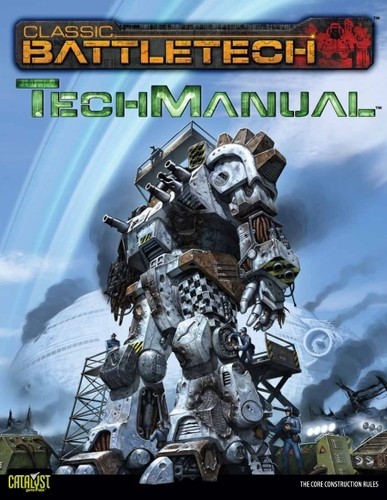
This was followed up by Total Warfare (the new iteration of the BattleTech Compendium as a complete rules reference), and the TechManual (with the complete and expanded rules for mech and vehicle construction)
Picture
Picture
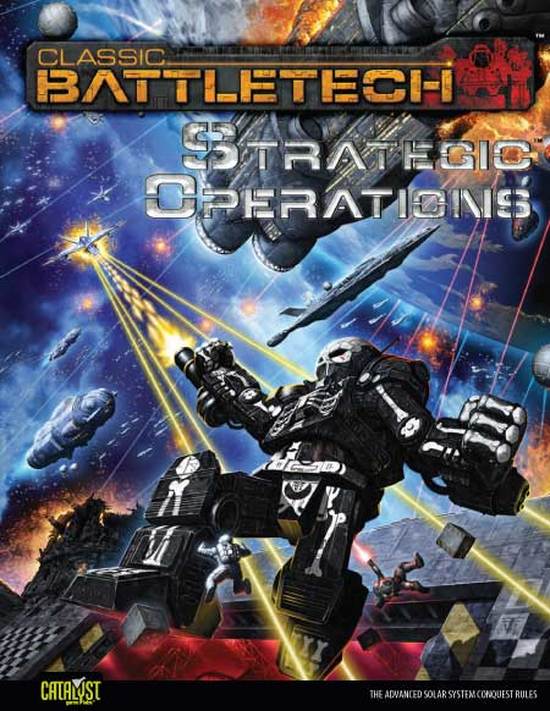
In 2008 Catalyst released two rulebooks expanding the gameline: Tactical Operations, with extended rules for terrain and advanced rules for equipment, including experimental military weaponry; and Strategic Operations, which covered massive military campaigns and interstellar combat.
Picture
Yeah, an Atlas. Painted as a skellington. In Space. 
You are not likely to see anything so awesome in your life.
Strategic Operations would go on to win the Origins Award for Best Miniature Rules (my guess is the judges got one look at that cover and collectively geekgasmed).Included in the volume was an updated version of the BattleForce simplified rules system for mass combat, which proved so popular that Catalyst would later expand into it's own gameline, Alpha Strike.

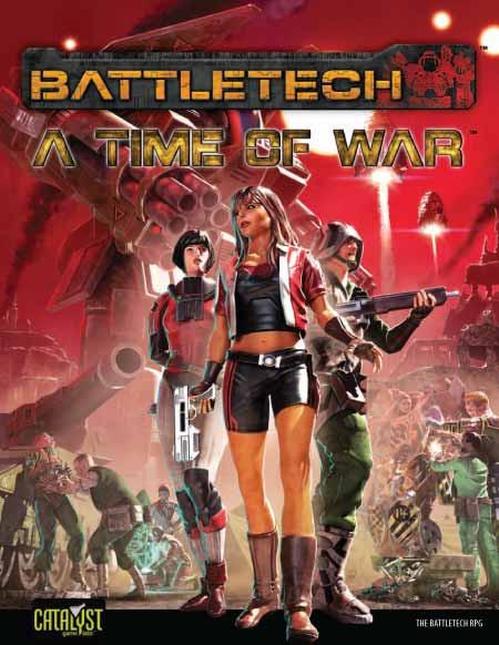
In 2009, Catalyst rebooted the Mechwarrior RPG, this time entitled A Time of War. The rules were a clear revision and streamlining of Mechwarrior 3rd edition, with an expressed goal of greater integration and cross-compatibility with the wargame. (I'll be reviewing the various editions of the RPG in it's own series of posts later on, given time to receive some Ebay orders and a chance to read and compare)
Picture
For many BattleTech fans, Catalyst  getting the license seemed like a dream come true. FanPro had done a great job, but with their passing the license could have easily passed into oblivion or gone to a company looking to make a quick buck with no respect for BattleTech's history. But Loren L. Coleman was well respected as intimately familiar with the fiction and seemingly invested in supporting the game to the best of his ability. 
Picture

"To them though, not to us,
we were just a catalyst
​for their imagination"

-Donald Sutherland
On March 16th, 2010, Frank Trollman, a freelance writer for Shadowrun, posted the following open letter to the Dumpshock forums...

"OK, as you may well have been able to surmise from release schedules, Catalyst Game Labs is in a bit of a financial pickle, and it is somewhat unlikely that they will retain the license to make Shadowrun products. This is not because Shadowrun hasn't been selling enough to cover expenses, but merely because a significant quantity of money is missing outright. Reliable sources put this figure at roughly $850,000. Which sounds like a lot, and it is. It is roughly 40% of Catalyst's entire sales for last year, missing over a three year period. There will of course be lawsuits, and there are already people drawing up legal documents accusing Loren Coleman of having hired people to construct an extension on his house through the company as "freelance writers" and somehow reporting an estimated $100,000 of convention sales as $6,000. Whether that is actually true or not is - of course - a matter for the courts to decide. And decide they presumably will.

But what that means for Catalyst as a company is pretty bad. It costs several dollars to print a book even when the pdfs are finished and ready for publication. A print run of say, 50,000 books (like the print run of Runner Havens) would cost somewhere between $150,000 and $250,000 to print and ship to distributors. And while it eventually sold to distributors at ~$15 a book (a total take home of $750,000), it did so over a period of three years, during which time they were paying interest on loans and paying for storage, and advertisement and so on and so forth. A book like that isn't actually taking home half a million in profits. Which is a bad thing, because it means that even if there was a complete book printed and ready to sell, even a total and rapid sell through would not pull the company out of the financial hole it is in - and the shortfall means that it does not have the cash on hand to start the ball rolling with a new major printing.

The tiny amount of drachmas that are left in the coffers are being used to print up tiny print runs of books that have sold through - another 3,000 books of Runner's Companion for example (~$15,000 to start up, maybe $30-40k towards paying creditors if it sells out). There simply is not the startup cash to bring upcoming books like the SR4 sixth world almanac or corporate guide forward. The writing is there, but the printing costs are not. Beyond that, the freelancers have not been paid, and some of them are withholding copyright until they are - meaning that even a tiny print run of these new materials is simply not possible. 

Many SR writers are quitting, have already quit, or have handed in notices contingent on demands which - word on the street - will not be met. And CGL does not even own Shadowrun, it leases the intellectual property from Topps. It seems unlikely that they will be able to make their licensing payment when the contract comes up for renewal - in a couple of months. At that time, CGL will cease being able to print Shadowrun or Battletech materials (they would presumably keep the license to Cthulhutech and Eclipse Phase for at least a little while longer, because those are separate contracts)
." (http://forums.dumpshock.com/index.php?showtopic=30231)
Picture
This caused an immediate uproar through the online community. Some people posted anonymously claiming to be freelancers who worked for Catalyst saying they had heard the same rumours. Some accused Trollman of being a troll...man, pointing to his outsoken bitterness towards the direction of the Shadowrun game.

The fires were flamed when it was revealed that Wildfire LLC, makers of the CthulhuTech RPG that was published through Catalyst, had severed all ties with the company a few months earlier due to "non-payment of royalties" and other unspecified "breaches of contract".

Moreover, a day prior to Trollman's post going viral, Jennifer "Tiger Eyes" Harding (Catalyst's Office Manager and Assistant Line Developer on Shadowrun) had resigned, for "ethical reasons." 

"I quit, after the directors were informed that this request was made, and chose to act in a way that I personally found unethical. I refused to do these, and other, things. I did not, at any time, falsify records, nor did I withhold information, as ordered numerous times by directors of the company. I was, however, told by Randall Bills that if I could not work with Loren, or felt the items I was being asked to do were unethical, that I should leave the company.

Ethics are a tricky matter. My personal ethics were involved. It is not up to anyone, besides myself, to determine what my personal ethics dictate for my own actions. Likewise, I cannot dictate to anyone at Catalyst how their ethics should tell them how to act. Legal issues are a separate matter, and I will gladly leave the determination of the legal issues in the hands of the appropriate authorities. I fullfilled my civil requirements in those regards
."
(http://forums.dumpshock.com/index.php?showtopic=30381&st=700&p=909463&#entry909463)

Adam Jury, who did graphic design work for Catalyst, also resigned, without comment.

Jason Hardy, the Shadowrun Line Developer, was the first to respond to the accusations (sort of), mostly with just a call for patience:

"As I've posted elsewhere, I'd like to ask everyone to slow down, take a deep breath, and be cautious before spreading rumors. I've asked Catalyst managers to issue a statement addressing the rumors, and hopefully one will be forthcoming soon."

...which went over about as well as one could expect from the internet. Jason H. would continue to defend Catalyst throughout the debacle, and would be the main voice accusing Trollman of having a vendetta against the company and "spreading unsubstantiated rumours".

2 days after Trollman's post, Catalyst  finally made an official statement:

"Catalyst Game Labs recently completed a detailed financial review of the company. We learned that over the past several years the company has achieved dramatic growth in terms of demand, increased total revenues and strong sales with an increasing market share in the gaming industry, despite a lackluster economy. We are thrilled by that news and are eager to move forward with our upcoming original game Leviathans, along with our other new casual games. We also remain committed to plans for our beloved licensed games: Shadowrun, BattleTech, Eclipse Phase, and CthuluTech.

While we wish the review had only uncovered positive news, we also discovered our accounting procedures had not been updated as the company continued to grow. The result was that business funds had been co-mingled with the personal funds of one of the owners. We believe the missing funds were the result of bad habits that began alongside the creation of the company, which was initially a small hobby group. Upon further investigation, in which the owner has willingly participated, the owner in question now owes the company a significant balance and is working to help rectify the situation.
The current group of owners was presented with this information on Monday. Administrative organization for the company is under review, and accounting procedures have been restructured, to correct the situation and provide more stringent oversight. We feel the management team at Catalyst did the responsible thing by seeking this financial review and we will continue to restructure as needed. We are in discussions with our partners and freelancers to remedy any back payments that may also be due as a result of this review.

We are embarrassed that this situation did occur but we hope our eagerness to make these changes, along with our reputation for making great games, will encourage you to stand by us. We understand that for a few employees the news was too stressful and we wish them all the best in their new endeavors. However, the majority of the team remains and will continue to bring great entertainment to you all. We appreciate the support our friends, freelancers, and fans have provided us in the past and look forward to a successful future
."
(http://ogrecave.com/2010/03/18/catalyst-monetary-trouble-rumor-gets-official-reply/)
Picture
​This response is bizarre for two reasons...first , they list among their "beloved licenses" CthulhuTech, seemingly unaware that they lost the license for that game in January? Secondly, and more importantly, it seems to be blatantly admitting fraud.

I think. I mean, I havent completed my accounting degree yet, but what I understand is that the owner of a company can make a draw against their equity. This becomes a debt. In correct accounting procedures, i.e. a balance sheet, which theoretically should have been done monthly (apparently Jennifer Harding's responsibility? She seems to have been asked to alter the details of a royalty payment in the ledger), any draws against owner's equity should have been reported immediately and shown when it exceeds equity. From what I can tell from this statement, Coleman was just taking money whenever he wanted, for whatever he wanted. In most corporations, owners would instead assign themselves a salary, just like any other employee. And well, the non-payment of royalties or freelancers suggests Coleman was deliberately (as opposed to unknowingly, as the response seems to be trying to imply) using company liabilities by increasing and deferring debt.

Basically, at this point I think we were all just waiting for Catalyst to declare bankruptcy and for possible criminal proceedings to occur.

In the weeks following, a whole bunch of freelancers who had not recieved payment withdrew copyright from their works until paid. Meaning books, some less than a year old, were suddenly out of print (this is why the aforementioned Strategic Operations now goes for $300 on ebay - luckily my FLGS happened to still have two copies on the shelf as of last week).
(https://icv2.com/articles/games/view/17106/catalyst-pulls-some-shadowrun-products)

Bob "Ancient History" Derrie, one of the freelancers who originally spoke up in confirmation of Trollman's post, got banned from the Shadowrun freelancer forums on March 22nd:

"Okay, so today I was banned from the Shadowrun freelancer forums. The reason being I was telling other freelancers I thought Jason was being dishonest in his statements, and one of them (who shall remain nameless) snitched on me. Truth be told, I haven't been happy with the situation at CGL for quite some time and this comes as a bit of a relief as much as anything. Several weeks ago I sent an e-mail and certified letter to Loren Coleman stating I would withdraw copyrights unless I was paid in full for the books I was owed (a check was cut and mailed to me about a week later). That also means I was paid when several other freelancers were not, so when the extant of CGL's financial troubles started making the freelancer rumor mill, I was less in a position to hold back drafts or remove copyrights than several others - because I'd already been paid for most everything.
So, now that I've been removed for fear of undermining Jason and the company, I'm calling it quits with CGL. I'm done freelancing with them, and I'm going to send them an e-mail tonight terminating my contracts. I will no longer be a Shadowrun freelancer (sniff) but I hope to be again one day under a different company and a different line developer
."
(http://forums.dumpshock.com/index.php?showtopic=30231&st=525&p=904265&#entry904265)

Derrie goes on to clarify this further on March 30th, along with a screen capture of chat logs:

"Okay, we're getting into some he said she said stuff here, so let me make this clear and then everyone can make up their own decisions.

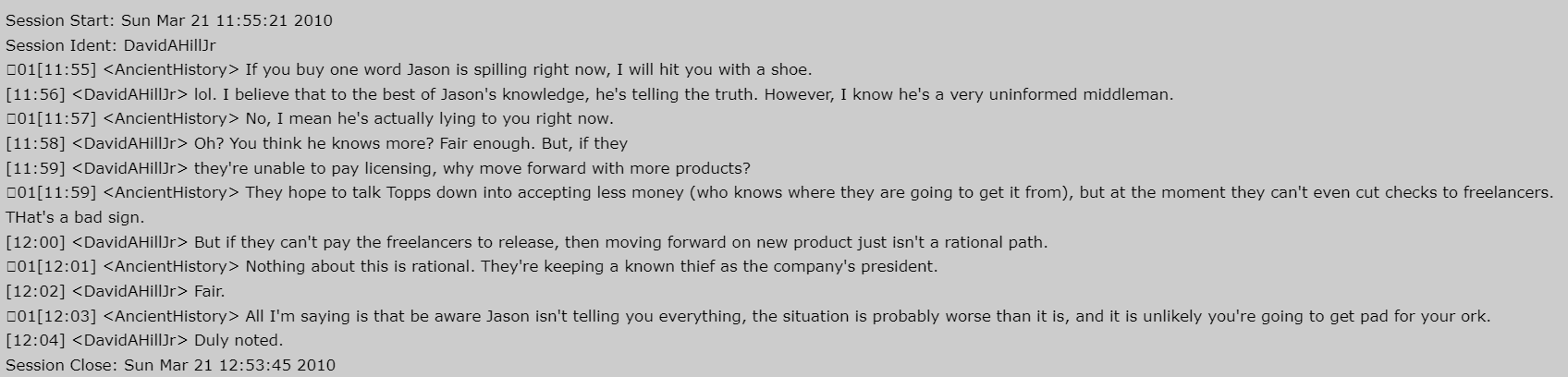
During a freelancer chat discussing an upcoming sourcebook, Jason Hard (Line Developer) posted a production schedule. Pretty much immediately thereafter, I privately pinged a couple of the other freelancers, mainly the new ones that didn't have the connections with the older freelancer pool and employees. One of them forwarded the log to Jason. The following is the transcript of the private conversation that was sent to Jason
:
Picture
Jason then immediately asked for my to be removed from Catalyst's program management software (Basecamp) and their freelancer boards for "undermining me [sic] and the company." Jason could not actually do this himself, as he doesn't have the access on either Basecamp or the freelancer forums. When my ban came through, I contacted Jason and informed him I was terminating my contracts. It is my understanding he and several first-time freelancers are currently working to re-write my drafts for (at least) Corp Guide, Sixth World Almanac, and Runners Toolkit."
(http://forums.dumpshock.com/index.php?showtopic=30381&st=375&p=907764&#entry907764)

By the by, that David A. Hill happens to be the same one who has run multiple Kickstarter frauds, apparently trying to make up for in volume over what Gareth-Michael Skarka has accomplished in time with Far West. But I digress...

On the 27th of March, Trollman leaked a letter by Randall Bill, co-founder and Creative Director, to the Catalyst Freelancers:

"As many of you have undoubtedly noticed, Catalyst has hit a few stumbling blocks under the weight of its dramatic growth over the last several years. As I’ve become the face of the current situation, I felt you all deserved a look at the current situation and some details regarding the steps Catalyst is taking to get all freelancer payments caught up so we can move forward.

...

On Monday March 15th, the Catalyst team delivered our review of the business for 2009 to the pertinent parties. Over the last several years, Catalyst Game Labs has showed a dramatic growth in terms of demand, increased total revenues and strong sales with an increasing market share in the gaming industry. A huge portion of the credit for that goes to you, the freelancers. After all, without your passion and dedication, there would be no books, no games, no Catalyst.

That growth has not come without its obstacles, however, and by Q4 of 2009 the Catalyst Managers acknowledged that a co-mingling of funds between the personal and business had occurred involving the company’s primary shareholders, the Colemans. We immediately initiated an audit of the company's historical financial records, and designed a comprehensive plan to get Catalyst's production and payments back on schedule. This process took some three months of very long days, and was overseen by our Bookkeeper and Operations Manager, in conjunction with the Colemans.

With the completion of the audit it is clear that the breadth of what occurred was significant, and would require extensive changes to correct. A detailed plan was outlined for changing the organization of the company, as well as many procedures to establish a strong financial oversight and series of checks and balances to ensure this doesn’t happen again in the future. It also included a proposal for how the Colemans will begin paying back the money involved. All of those detailed findings and action plans were delivered to the pertinent parties on the 15th of March as a key step in our efforts to move forward with full disclosure and transparency. A series of discussions are currently underway on how best to proceed.

Last week, while in the process of drafting announcements for the public, as well as our vendors (distributors, printers and so on), licensors (i.e., Topps), Catalyst freelancers, and so on, some information was leaked to the public (and, as is the way of such things, immediately took on a life of its own). Obviously I was forced to deal with that leaking of information and am just now reaching a point where I can be drafting information to share with our freelancers. 

There are several critical concerns (in no particular order) that Catalyst is moving to address ASAP.
1. Re-organizing and re-structuring to prevent this situation from occurring again.
2. Finalizing a plan for how the Colemans can repay the money owed to Catalyst.
3. Ensuring the continuity of license with Topps concerning Shadowrun and BattleTech.
4. Finding additional sources of revenue in the short term to help start paying down various debts (including monies owed to all of you).
5. Working with Posthuman (Eclipse Phase) and WildFire (CthulhuTech) to determine if they still wish to work alongside Catalyst. If they do not, we’ll make every effort to spin those games off to those respective companies in a way that will best ensure future growth.

We’re moving as fast as we can in an attempt to address those primary concerns (as well as many others). However, this process simply is taking time … and will continue to take time heading into the future.

Some of you have already expressed your inability to be patient with Catalyst as we try and find solutions, and I completely understand your frustration. That frustration was mirrored by several Catalyst full-time employees who felt they simply could not continue with Catalyst after all that has occurred, including Jennifer Harding (Office Manager and Bookkeeper), Dave Stansel (Operation Manager) and Adam Jury (Head of Graphic Design), all of whom have formally left the company. We’re already moving to try to find appropriate people to take on their work and responsibilities. Though I wish their decisions might have been different—as they’re incredibly valuable to what Catalyst has been able to accomplish—I cannot fault them for the choices they’ve made. I’ve worked with them in various capacities for a long time and consider them good friends. I wish them well and hope we’ll have a chance to work together again some time in the future.

During all of this, my decision-making process has been called into question. After all, how can I accept what’s happened? Why are the Colemans still involved at Catalyst if these events occurred? Usually I would have reservations about sharing such personal thoughts. However, since I’m asking for each of you to decide if you’re willing to allow Catalyst some time to address this situation, I feel it only appropriate to give you my thought process so each of you can make up your own mind.

1. Catalyst would not be enjoying its current level of success without Loren’s strategic thinking, or without the connections he’s forged in our industry. We started as a small, internet hobby company in 2003 and only officially formed Catalyst three years ago. Yet as of last Gen Con we “stole the show” and are considered one of the “up-and-coming big boys.” While Catalyst is far more than a single person and is very much a team effort (including all of you), Loren’s contributions have been crucial.
2. Would Catalyst survive if the Colemans were no longer involved? Yes, I believe it would. However, I believe that despite the horrific mistakes made, we will heal faster by keeping Loren involved as part of Catalyst’s ongoing strategic thinking. Last week that belief received a huge chorus of support when we contacted and/or were contacted by numerous people in the industry, including three titans of the industry (I’m not at liberty to share their names to this large of a group without asking their permission). Each of those three were given a blunt (albeit very brief) synopsis of what occurred, and yet each still pledged their support to Loren and me in helping move forward (both in the incredible business savvy they possess that made them titans, but also in potential revenues to bring to the company). Furthermore, two of these people are intimately familiar with Topps and with their strong advice in our pocket we’ve already approached Topps. Without getting into details we told Topps of our financial issues and made our case that despite those mistakes we have been fantastic in protecting and expanding the BattleTech and Shadowrun brands and that we are still the best possible stewards of those brands. Topps liked our attitude and appreciated our bluntness and we’re setting up a face-to-face meeting in NY, following the GAMA Trade Show this week, to present a plan for how to move forward with securing those all-important licenses.
3. I believe the best possible way to incentivize someone is to create a recipe for success. Excessively punishing and kicking someone to the curb does not incentivize anyone. Keeping someone involved in the process and invested in seeing Catalyst succeed so they can succeed is a far better path for all involved (and one I’ve seen succeed time and time again at all levels of business).
4. I’m not the only one that has seen and believes in the points above. If all the mangers, employees and investors of Catalyst had lined up in opposition to my thoughts and opinions as outlined above, then I very much believe I would’ve backed away, feeling that my decisions were compromised. However, while some have left and/or decided they can no longer work with Catalyst, we still have a very strong team of investors, managers, employees and freelancers that supports the overall direction of trying to deal with what’s occurred while finding ways to move forward.
5. Considering how long I’ve been involved, and how much blood, sweat and tears I’ve given for Catalyst, I’ve seen a lot of “How can Randall continue to work with Loren?” I’ve obviously known the Colemans for a very, very long time and been involved intimately with the company from the day the idea was born 8 years ago. And after reviewing everything and doing some massive soul searching, I’ve made a personal decision that this was a terrible, terrible series of mistakes; I bear my own weight of guilt in this in that I didn’t pay better attention to the various red flags raised over the years that something wasn’t right. More importantly, I see in the Colemans every indication I need to see in order to make forgiveness seem appropriate. This falls into a “very personal” category, but it’s key to my point of view and if you’re trying to understand my decisions, it’s important you know this. While I may not be the usual image of an LDS church member that comes to most people’s mind, my faith is a bedrock; it is the only reason I’ve survived the stress of the last several months and especially last week. But if I see a person genuinely sorrowful over a mistake (regardless of the size of those mistakes), and see that same person trying hard to make the mistakes right, I personally have to forgive them. Just as this as been the most difficult personal and professional crises of my career, it has been one of the most difficult for my faith, as the rage has had to give way to compassion and forgiveness. Please note, however, that this point is 100% a personal decision, one that deals with whether I can keep a personal relationship with the Colemans. If none of the other points above existed, then I would’ve asked Loren to completely step away from the company and he and I would’ve solved our issues in private. However, those very points are exactly why I’ve stated I believe the Colemans should still intimately be involved with the company (though a host of checks and balance are in the process of being put into place) and why I can set aside my own personal anger and disappointment to try and move forward in what I believe is the best possible way to save the company and to save the games we all love to work on.

I apologize for the length of the email and for the incredibly personal nature of it, but I felt it warranted. Ultimately each of you will need to ask yourselves whether you can still trust Catalyst to treat with you fairly and to pay the debts owed you, while ensuring that such debts do not pile up for the future. We’ve laid strong groundwork to do just that over the last week and GTS this week will give us the opportunity to further cements those plans.

We are also in the process of bringing on a new Bookkeeper who will continue the plan laid out by our previous Bookkeeper to send each of you a thorough audit of what our books show. This will allow us to ensure we’re not missing any work by anyone and will help us build a plan for how to start reducing the debt owed to each of you. However, the original plan called for that to go out by the end of March, but with the changing of the Bookkeeper that’s going to need to be middle to end of April.

I hope each of you will be willing to bear with us during this crisis and give us the chance to make this right. However, if you feel you cannot, I completely understand and of course wish you well. More importantly, even if you feel you cannot do future work for us, of course we still will work to pay the debts owed to you.

Thank you for your time and patience
."
(http://forums.dumpshock.com/index.php?showtopic=30383&st=200&p=906505&#entry906505)
Picture
You might, like me, have noticed at this point that the person we haven't heard from is Loren L. Coleman (spoiler: we won't).

Maybe it's because I'm reading Star League at the moment, but I can't help but compare and contrast the entire situation to James McKenna's impassioned apology and resignation as Director-General after the Syrma disaster.

But, well, McKenna was Canadian.

Anyways, on the 3rd of April Jennifer Harding weighs in again on behalf of the Freelancers getting stiffed by Catalyst's frau - *cough* "money mismanagement":

"For those of you wondering why I'm personally making such a fuss, let me state that I am a single mother of two young children, currently unemployed. The amounts they owe me for those projects make a WORLD of difference in my life - equal to 5 months of rent payments, to put it in perspective. That I would quit a job rather than compromise my ethics -- when I was asked by Loren Coleman to lie on financial reports to Topps -- should state just how completely terrible the situation was. All I am asking, at this point, is that Catalyst pay me the amounts I am owed, for the work I did in good faith, and that they have profited on. That those profits went out of the company, is not something I should be punished for. Loren's actions have a direct and significant
impact on my life and wellbeing ,and that of my two children
."
(http://forums.dumpshock.com/index.php?showtopic=30381&st=675&p=909422&#entry909422)

"I'm glad I could put a face on the situation, hopefully for everyone. But it isn't just me. It's the new dad with a baby and a mortgage who could use the money for medical bills. It's the single mom paying her way through school who could have really used the money for Christmas presents for her daughter. It's the man facing bankruptcy who just lost his job, and could have really used the money to make a few house payments until he found another job, as the bank threatened to take his house. It's the student who desparately wanted to go to GenCon and couldn't. It's the man who's been out of work for 6 months and can't pay rent. It's all the employees of CGL who took late paychecks, or skipped getting paid altogether, because they were told 'the money isn't there.'

These are a real examples of people, who I won't name, who begged and pleaded with Catalyst for even a portion of their back owed pay. There are hundreds of people who have freelanced for Catalyst. Writers, artists, editors, layout artists. All of them fans. All of them who provided work for Catalyst in good faith. People who have written pleading letters to Catalyst asking for money, people who have threatened to sue, people who have just walked away, burned by the company. 

When you read about what's happening now, think about all those people. Not just me (although I will admit to being far more touched than I could imagine by all the incredible offers of well wishes and support). 

Then think about the two people who took that money -- as has been stated in letters released by folks other than me (I wasn't ever even sent that freelancer letter). If Catalyst can't--and hasn't in years--met it's contractual obligations to all the freelancers who poured their hearts into their work, why can't they? Where did the money go? I know. You know. If they can't even pay a few thousand dollars to get products back into production, how can they pay for the larger debts? How are they supposed to pay tens of thousands of dollars for printing? For shipping? For royalties? For all the other expenses a printing company faces?

Yes, there is a face on this entire debate. It's the face of a hundred people like me, who really could use the money they're owed. And who, most likely, will not see it. There's the true tragedy
."
(http://forums.dumpshock.com/index.php?showtopic=30381&st=750&p=909619&#entry909619)

The next day, Jason Hardy issues an update to say that Catalyst is cutting cheques for the Freelancers, and throws some more shade at Frank Trollman:

"There are a few things that need to be cleared up here. First, I saw a couple times the claim that the Shadowrun freelancer pool was down to three people. I'm not sure where that number came from. Maybe it was because Peter said something about having six core people, then people subtracted Adam, Jennifer, and Bobby, and got three. But regardless of how that number came to be, it's wrong. There were more than three freelancers in the SR pool after Adam, Jennifer, and Bobby left. Given that freelancers have been targeted by those wishing to discourage them from working with Catalyst, I hope people understand that I won't be offering any more information about who those freelancers are at the moment, though they are always free to speak for themselves.

Second, the amazing thing about Frank's latest post is the underlying assumptions there. Everything is written from the point of view that Catalyst will lose the Shadowrun license. Has Frank overheard conversations between Catalyst management and Topps representatives? Does he know how they went? No. But he makes his assumptions anyway.

Then he continues on making assumptions, many of them based on people sharing his view of the situation. He assumes that I must be doing what I am doing because I am in essence auditioning for whoever the new license holder will be. I wish he would stop trying to suss out my thought process--I have never spoken to him, I don't believe he knows me well if at all, and every time he makes an assumption about what I know and how I'm thinking he's off.

He assumes that no changes have yet been implemented in Catalyst's financial processes; he says things like "Everything that is sold from now until closing time will put money into Loren's pocket", but that is untrue. As Randall's letter mentioned, a document outlining new processes had been sent to owners, and at least some of those processes have now been implemented. Money will go where it is supposed to go. 

Frank assumes management wants to keep freelancers quiet so the managers can pocket money. That doesn't explain why part of management spent 12 hours on Friday getting checks ready for freelancers, both those who have been vocal and those who have not. He made his assumption without knowing that fact. This also harms his point that "Extorting the company is the only way a person is going to get paid," since as I said, both freelancers who spoke out and those who did not are going to receive some payment.

He assumes he knows the minds of the "new company" well enough that they will look down upon people who did not act out against Catalyst. How does he know the minds of the people running this company? Will they really ignore a quality freelancer just because that freelancer was discreet?

And there's a common slant to all of his assumptions, namely, that Catalyst will close, a new company will go away, and the freelancers who spoke out will be rewarded. That is the underlying bias in everything Frank presents. I'm not commenting on that bias one way or another except to say that if you're reading Frank's posts, please be aware of that bias. And the fact that he has that bias, plus uses unconfirmed (and/or distorted) information from anonymous sources while claiming to have journalistic integrity makes my degree in journalism shudder. Frank has a good mind and makes interesting points, but they are slanted. What he is doing is many things, but not journalism
." (http://forums.dumpshock.com/index.php?showtopic=30381&st=850&p=909995&#entry909995)

On April 6th, Hardy then follows up to confirm that many Freelancers have recieved payments due:
"In other news, I've heard from multiple sources that checks for Shadowrun work are being received. Are we all caught up? No. Is it better than it was seven days ago? Yes!"
(http://forums.dumpshock.com/index.php?showtopic=30381&st=1100&p=911144&#entry911144)
Picture
Meanwhile, Adam Jury announces that Posthuman Studios is in the process of severing their ties with InMediaRes as well, pulling the Eclipse Phase license. (http://forums.dumpshock.com/index.php?showtopic=30381&st=1075&p=910942&#entry910942)

On April 8th, Phil "Ketjak" DeLuca, one of the co-owners of InMediaRes weighs in with his opinions on the debacle"

"I hope they can pull a rabbit out of the hat and save the company and retain the two core licenses, but with only the insane, carefree or negligent willing to give them money and Topps now evidently having access to people who have publicly stated Randall and Loren L. Coleman asked them to falsify royalty reports, I can't imagine any cash flow will remain positive that they do not directly control. This ignores the potential accounting and legal issues one can get into in situations like this - how long until "defending against the Government" becomes their primary activity? That isn't cheap or quick and easy like I like my dates.

If it does come to that, where are they going to get the money to make that defense?

If it doesn't come to that, do the other LLC members really want someone who is either careless enough to "co-mingle" funds or avaricious enough not to care as the President? Randall might have been a good choice, but his recent business decisions (including "permit Troy to sell product while their copyright is revoked by "forgetting"" and "Loren L. Coleman is the best person to lead and represent this company" and "Loren will remain active in the business as more than a freelancer") and apparent ethical choices (such as apparently "falsify these reports" and "Loren L. Coleman is the best person to lead and represent this company" and that other one about the convicted child toucher) and apparent legal choices (including apparently "falsify these reports" and apparently extorting the company in front of other directors should this come to light) make it clear he is unsuited on many levels to lead at all, let alone a company on fire. But since Loren L. Coleman is calling the shots and still has access to the checkbook, I guess that's a moot issue anyway.

It was entirely avoidable, too, even if one steps in about when Jennifer did after the embezzlement occurred. But again, Randall N. Bills and Loren L. Coleman and Heather J. Coleman made choices to suppress and ignore this as long as possible then refuse to make the obvious choices (like "remove Loren L. Coleman and Heather from the operations of the business"), and here we are on Dumpshock.

There are many possible futures, and sadly I see few of them with IMR emerging as a functional business holding the two key licenses. Meh - less likely things have happened
."
(http://forums.dumpshock.com/index.php?showtopic=30571&st=0&p=912011&#entry912011)

....going on to clarify:

"No, I have not given hard information about the situation to anyone on these boards. There have been accusations that I have been feeding Jennifer and Frank information, but a) Jennifer has more information than I do and b) I haven't met Frank before, though we flamed each other on ENWorld a few years back, IIRC. Frank won't recall, it wasn't big by any standards.

No, I have not gone to any authorities yet, I am an optimist. No, I have no desire to be an IMR managing member or director as I don't have the time to fix this and I am not willing to give up a job in the electronic game industry for a salary dependent on Topps' goodwill toward IMR.

No, I have not lied or exaggerated. Neither am I a lawyer or accountant, just someone who engages in business without deception for fraudulent purposes.

Yes, I am frustrated at this wholly avoidable situation because actions that could have been taken to fix the problem were not. No, I am not "angry." I do come across that way, but I'm not. For the record, I have been angry precisely three times about this:

1. when I saw the list of "draws"
2. when I created a couple of graphs showing the draws over time and the draws on a daily basis
3. when it became clear that the managing members and directors were using a cat's paw to discredit me among the owners, and that paw had a little easily-discovered kitty litter on it I found when looking for his bibliography (in a world of Google...)
" (http://forums.dumpshock.com/index.php?showtopic=30571&st=50&p=912116&#entry912116)

"Change does not surface when you are not ready to be the catalyst. Your reaction matters,
​not your inaction."

-​Michael Bassey Johnson
On April 12th, Troy Garner, who ran the BattleShop, managed shipping, and answered customer service emails for Catalyst, was terminated. His position is assumed by Tara Bills. (http://forums.dumpshock.com/index.php?showtopic=30595&st=175&p=914340&#entry914340) Adam Jury confirmed a rumour that Troy had managed shipping on his personal computer, taking it
(and all the shipping information) with it when he left. (http://forums.dumpshock.com/index.php?showtopic=29879&st=200&p=919466&#entry919466)

On April 15th, Stephen McQuillian quits his position as Production Manager for Catalyst Game Labs. He states that his reasons were not related to the current fiasco, and makes a (futile but well-intentioned) attempt to calm the flames:
"I've been approached by several people so far, and thought I'd go ahead and make the public announcement. I am no longer working as the Production Manager for Catalyst Game Labs. My reasons for leaving were not related to the current events being speculated about in this thread. I have previously chosen to remain a very quiet member of the community on these arguments. That choice will still stand.

There are innumberable factual inaccuracies in all of the arguments and it is not my place to clarify each of them. 

I have asked this before, both publically on DSF and in private conversations with several people, but will do it one more time. Owners - please remember that you have your own methods of communincating with each other and that airing the dirty laundry of either side of your debate is not helping anyone. BT crew - I respect your position, and fully understand the frustration that you are feeling (I met weekly with Herb and he is your biggest advocate, so trust me when I say this), but coming to DSF just to slam on the SR folks isn't going to help mend the fractures within our freelancing community. 

Everyone, please take a deep breath, look at the world from your perspective, their perspective, and the perspective of the few of us caught in the middle. After doing that, post. You can keep your ire, your personal emotions, everything that you feel, but post in a constructive manner rather than one which ends up getting people banned
."
(http://forums.dumpshock.com/index.php?showtopic=30595&st=550&p=916335&#entry916335)

On April 21st, Jason Hardy posts a new statement regarding IMR's financial situation:
"While Catalyst has been publically quiet, we’ve been working behind the scenes these last few weeks, reviewing our processes across the board and changing and updating as necessary, while still working on future products.

As announced on March 20th, a select list of Shadowrun books was put on hold as we negotiated with several freelancers concerning those products. We’re pleased to say that within the last three weeks we’ve been able to make 65 payments to dozens of freelancers covering a variety of projects and resolved the hold issues. This process included completely paying off four books already in print while simultaneously auditing past due contracts in order to continue payments on completed projects. We also chose to pay off a book in preparation for sending it to print. We believe that this three-fold approach of resolving the disputed contracts, establishing a payment plan for completed work, and ensuring new product continues down the pipeline is the best recipe for success at this time.

Catalyst has been in negotiations with some additional parties for weeks concerning how to pay down debts, including making partial payments, turning over stock and so on, as they’ve requested. We’ve been notified that some of these parties are pursuing additional legal means to secure the monies owed despite the negotiations. Our legal counsel has advised that the lawsuit is baseless. As such, Catalyst will defend against it and expect it to be dismissed in the near future. Regardless, we’re continuing our negotiations and will continue to move, as we’ve been doing, to pay debts down as quickly as possible.

Finally, as some of you may have noticed, we’ve just changed the legal text and logos on all our appropriate sites that reference Shadowrun and BattleTech from WizKids to The Topps Company, Inc., per their direction. We’ve been in contact with Topps for weeks regarding these situations. We are currently in negotiations to re-secure the Shadowrun and BattleTech licenses
."
(https://web.archive.org/web/2010051.../wordpress/2010/04/catalyst-game-labs-update/)
Picture
​On the 19th of April, three of InMediaRes's creditors
(J.P. Sugarbroad, Paul Stansel and Wildfire LLC)
filed an involuntary petition for Chapter 7 Bankruptcy against InMediaRes.
(https://ia801406.us.archive.org/1/items/gov.uscourts.wawb.504666/gov.uscourts.wawb.504666.1.0.pdf)

​InMediaRes answers the summons of their creditors on May 18th (https://ia801406.us.archive.org/1/items/gov.uscourts.wawb.504666/gov.uscourts.wawb.504666.4.0.pdf)

The Creditors file two motions: one for immediate relief
(https://ia801406.us.archive.org/1/items/gov.uscourts.wawb.504666/gov.uscourts.wawb.504666.5.1.pdf),
the other to shorten time 
(https://ia601406.us.archive.org/1/items/gov.uscourts.wawb.504666/gov.uscourts.wawb.504666.7.0.pdf).

The motion to shorten time is approved, and a hearing is held on May 21st, but the creditor's motion for immediate relief is denied
​ (https://ia801406.us.archive.org/1/items/gov.uscourts.wawb.504666/gov.uscourts.wawb.504666.19.0.pdf)

A pre-trial hearing is set for the 18th of June.

What follows is several months of court proceedings with very little public comments whatsoever. The court documents are archived here:
https://www.plainsite.org/dockets/k...-bankruptcy-court/inmediares-productions-llc/

On October 18th, 2010, the filing for Involuntary Bankruptcy was denied and the case dismissed.

From the perspective of fans and onlookers, there's no completely satisfactory resolution. This is the way our tale ends, not with a bang, but a whimper.
Picture
nInMediaRes eventually paid it's debts. The licensing agreements with Topps are resolved, ad Catalyst Lab Games continues to publish BattleTech products to this day. A lot of good employees and freelancers, some of whom had been with BattleTech or Shadowrun for years. The online flames died down, but bitter coals remain to this day. Catalyst's reputation was irreparably damaged. Though, honestly this seems to be more widespread among Shadowrun players, rather than BattleTech, which may have to do with the majority of the incidents playing out over Shadowrun themed forums, and the general dis-satisfaction of fans with the current edition of the game. Whereas, on the other hand, BattleTech players still tend to hold Catalyst's products for their game in high regard. Presumably, the financial issues have been fixed, and stricter accounting procedures implemented, as no further drama has been forthcoming in the 8 years hence.
1 Comment

BattleTech Real World History Part VI

9/2/2018

0 Comments

 
Picture
FanPro was a German RPG publishing company best known for the fantasy role playing game Das Schwarze Auge ("The Dark Eye")
Picture
​FanPro produced BattleTech in Germany from 1988 onwards under license from FASA. More than simply translations, FanPro often added content and combined multiple products into omnibus editions.
Picture
​When FASA closed operations, FanPRo created a sister company in the U.S. (FanPro LLC) to license the BattleTech IP from WizKids. FanPro began publishing books for the tabletop game under the new moniker "Classic BattleTech". Their output was significant and highly regarded to this day. Their first sourcebook was Fedcom Civil War in '02, advancing the timeline of the game towards the events that would eventually lead to the Dark Age setting of the Maechwarrior clix game. In '03 this was followed up by Field Manual: Updates (providing a comprehensive look at the military of all factions), Combat Operations (providing background material on how war is conducted in the BattleTech universe, including an advanced campaign system and other rules expansions), and The Classicc BattleTech boxed set (technically the 5th edition of the main rules)
Picture
Picture
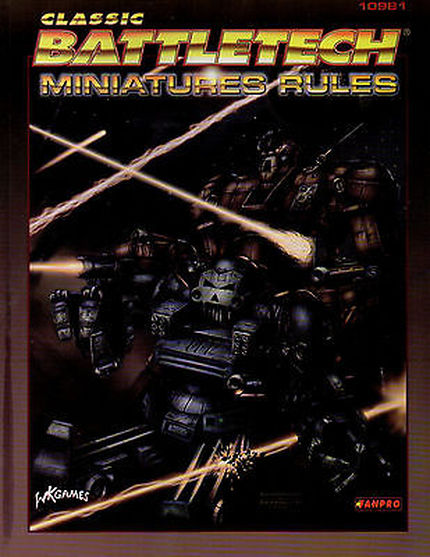
​Also published in 2003, the Classic BattleTech Miniatures Rules was the first rulebook to separately detail playing the BattleTech rules specifically using painted miniatures and 3D terrain, without hexmaps.
Picture
​FanPro's output during the next few years was incredibly impressive, and of a quality easily comparable to the best of FASA. From 2002 to 2007 FanPro released 46 products, including the lauded House Handbooks, 10 Technical Readouts, and 17 sourcebooks. But when their initial license expired, and was not renewed.

​Rob Boyle, a former editor for FASA, expounded on the reasons for this in an RPGnet forum post in 2010...
Picture
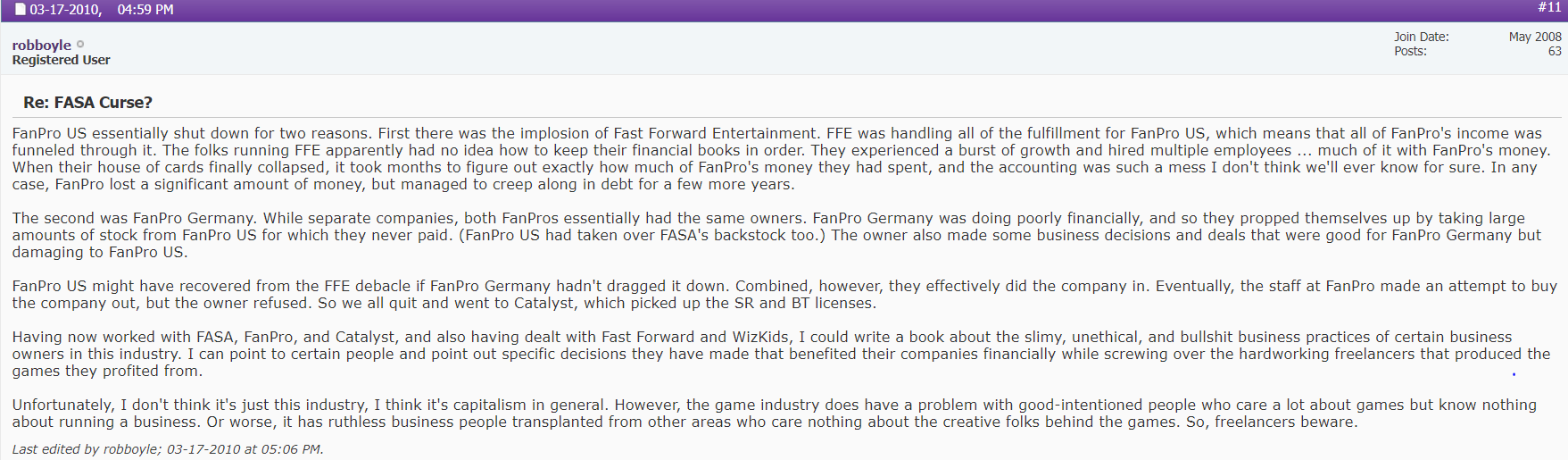
"FanPro US essentially shut down for two reasons. First there was the implosion of Fast Forward Entertainment. FFE was handling all of the fulfillment for FanPro US, which means that all of FanPro's income was funneled through it. The folks running FFE apparently had no idea how to keep their financial books in order. They experienced a burst of growth and hired multiple employees ... much of it with FanPro's money. When their house of cards finally collapsed, it took months to figure out exactly how much of FanPro's money they had spent, and the accounting was such a mess I don't think we'll ever know for sure. In any case, FanPro lost a significant amount of money, but managed to creep along in debt for a few more years.

The second was FanPro Germany. While separate companies, both FanPros essentially had the same owners. FanPro Germany was doing poorly financially, and so they propped themselves up by taking large amounts of stock from FanPro US for which they never paid. (FanPro US had taken over FASA's backstock too.) The owner also made some business decisions and deals that were good for FanPro Germany but damaging to FanPro US. 

FanPro US might have recovered from the FFE debacle if FanPro Germany hadn't dragged it down. Combined, however, they effectively did the company in. Eventually, the staff at FanPro made an attempt to buy the company out, but the owner refused. So we all quit and went to Catalyst, which picked up the SR and BT licenses. 

Having now worked with FASA, FanPro, and Catalyst, and also having dealt with Fast Forward and WizKids, I could write a book about the slimy, unethical, and bullshit business practices of certain business owners in this industry. I can point to certain people and point out specific decisions they have made that benefited their companies financially while screwing over the hardworking freelancers that produced the games they profited from
."

​Boyle wouldn't be the only one to speak out about business practices, something I'll be going into in depth in the final post in this series...
0 Comments

BattleTech Real World History Part V

9/2/2018

0 Comments

 
Picture
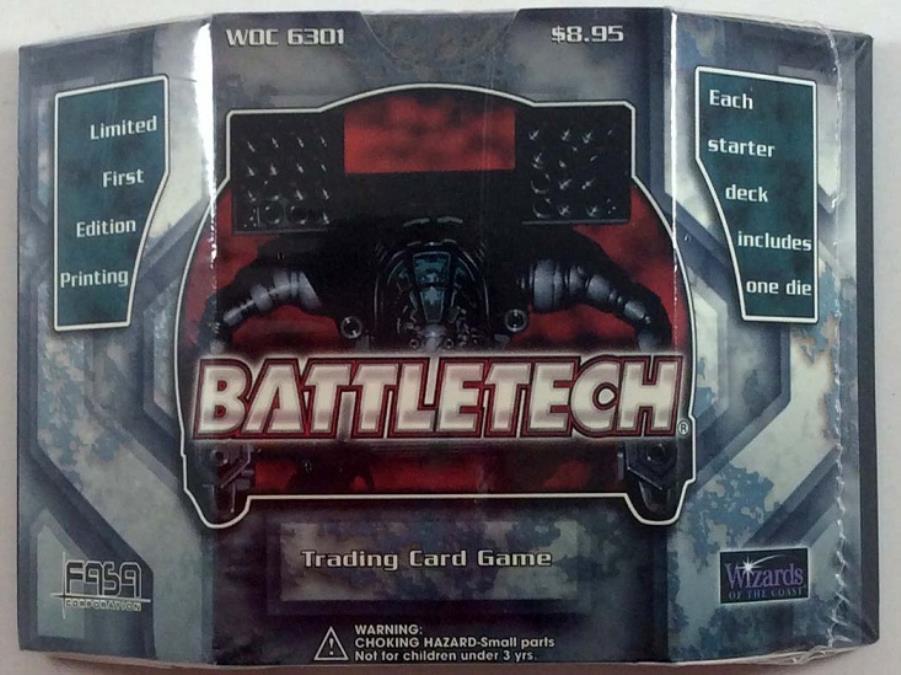
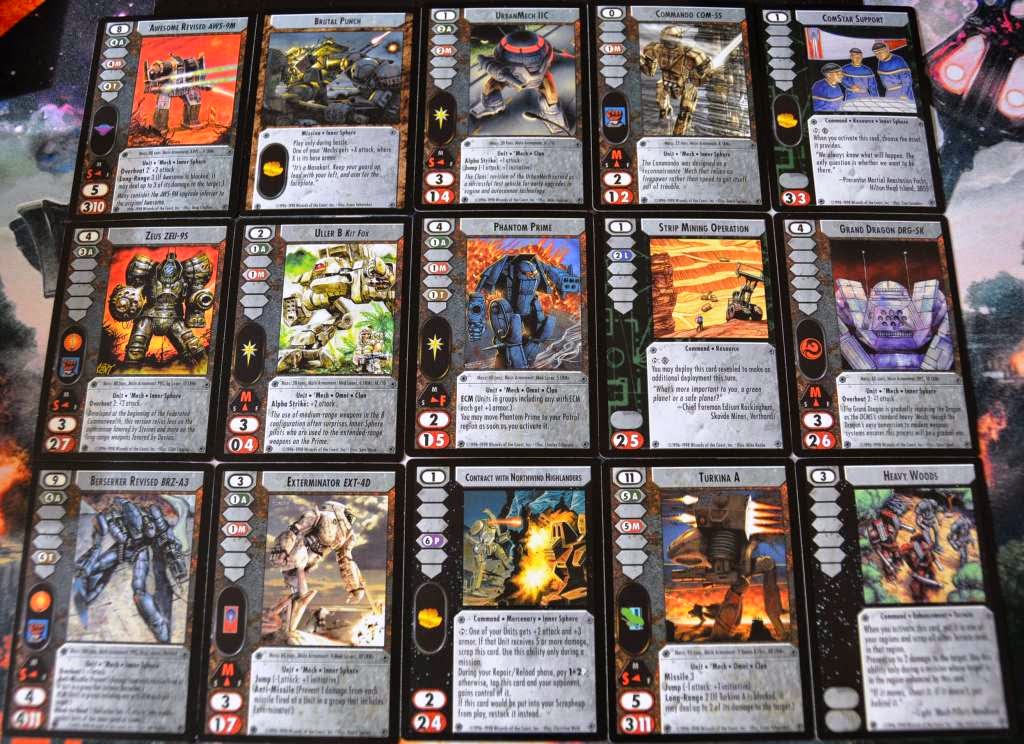
FASA licensed BattleTech to Wizards of the Coast in 1996 to capitalize on the Collectible Card Game craze that swept through the '90s. The BattleTech CCG featured mechs, characters, and technology from the FASA gameline, with all new artwork and rules similar in play to Magic: The Gathering. 
Picture
It was decently popular, lasting until 2001, with one expansion per year: Mechwarrior, Counterstrike, Mercenaries, Arsenal, Commanders and Crusade. A small but devoted fanbase remains to this day. 
Picture
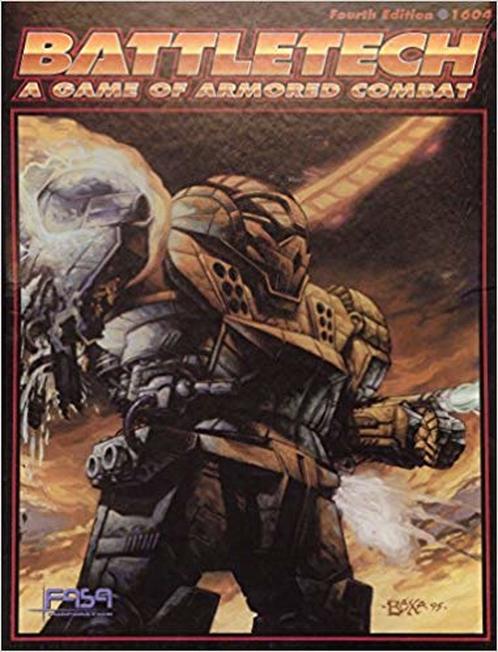
​A 4th Edition of the game was also released in '96. The first not to feature any of the Unseen, the Atlas replaced the Warhammer as the iconic cover model.
Picture
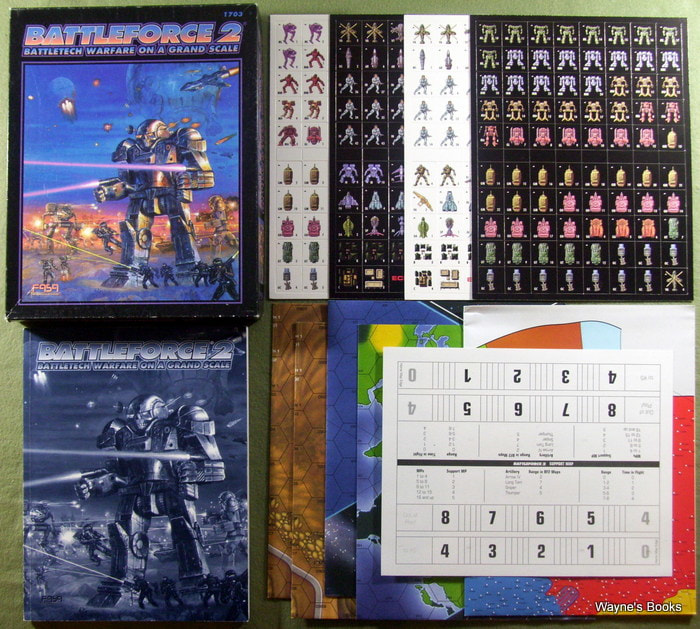
This was followed swiftly by First Strike (an introductory product for new players that discussed game tactics and scenario and campaign creation), the Field Manual series (covering everything from Comstar to Mercenaries, to all the major factions of the Inner Sphere, remaining essential splatbooks for the setting to this day), Maximum Tech (the combined and updated rules for designing and building mechs), AeroTech 2 and BattleForce 2. 
Picture
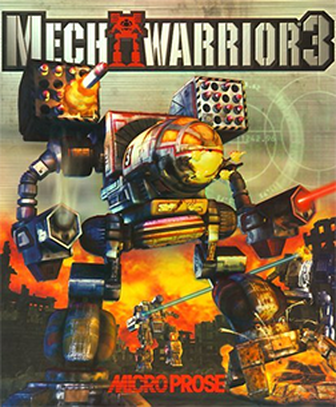
In 1996 FASA Interactive Technologies (aka FASA Studio); formed the prior year in partnership with Dennis Thorley and Spectrum Holobyte to handle video game development; became a wholly owned subsidiary of the Virtual World Entertainment Group. Partnering with Hasbro's MicroPose studios in 1998, released Mechwarror 3.
Picture
​Shortly thereafter Microsoft acquired Virtual World and FASA Interactive including proprietary ownership of the Mechwarrior series of games (and FASA founders Weisman and Babcock went with them). This is interesting in that it led to the current situation wherein Microsoft owns BattleTech as a videogame property.

In 2000 Jordan Weisman left Microsoft and founded WizKids to promote his new idea of "clix"-based miniature games. 

Despite the legal hiccups, the 1990s was a very successful decade for FASA overall, but it would unfortunately be their last. On April 30th 2001, FASA suddenly and without warning announced they were ceasing all active operations.
Picture
Many believed FASA simply went out of business. There was a lot of classic gaming and miniature companies closing their doors around that time. TSR, the 900 pound gorilla of the RPG industry, had declared bankruptcy. According to the owners, however, they jointly decided to quit while still financially sound in what they perceived as a dying market. Moreover, Mort Weisman was ready for retirement, probably even moreso now that the founders had largely gone over to videogame development. FASA still exists to this day as an IP holding corporation, but the rights to the BattleTech tabletop game were sold to WizKids.

​I suppose we can only count ourselves lucky that Microsoft didnt end up with the tabletop game as well. 

It was the end of an era. The distinct visual design and writing of FASA products was something I'd grown up with. Not just BattleTech, but also Shadowrun, Earthdawn, and Doctor Who. As the D20 glut loomed over the hobby in the coming years, it really seemed like the world had lost something without FASA's presence on the market.
Picture
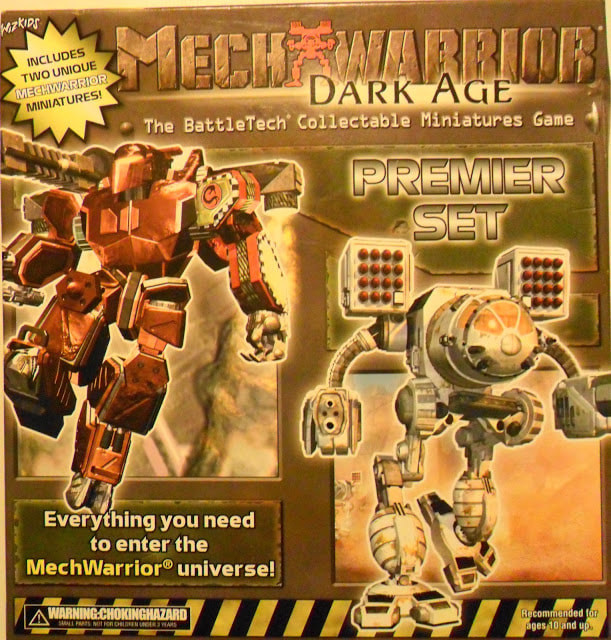
​In 2002, WizKids released Mechwarrior: Dark Age, a "Clix-style" collectible miniatures game based on the BattleTech universe. 
Picture
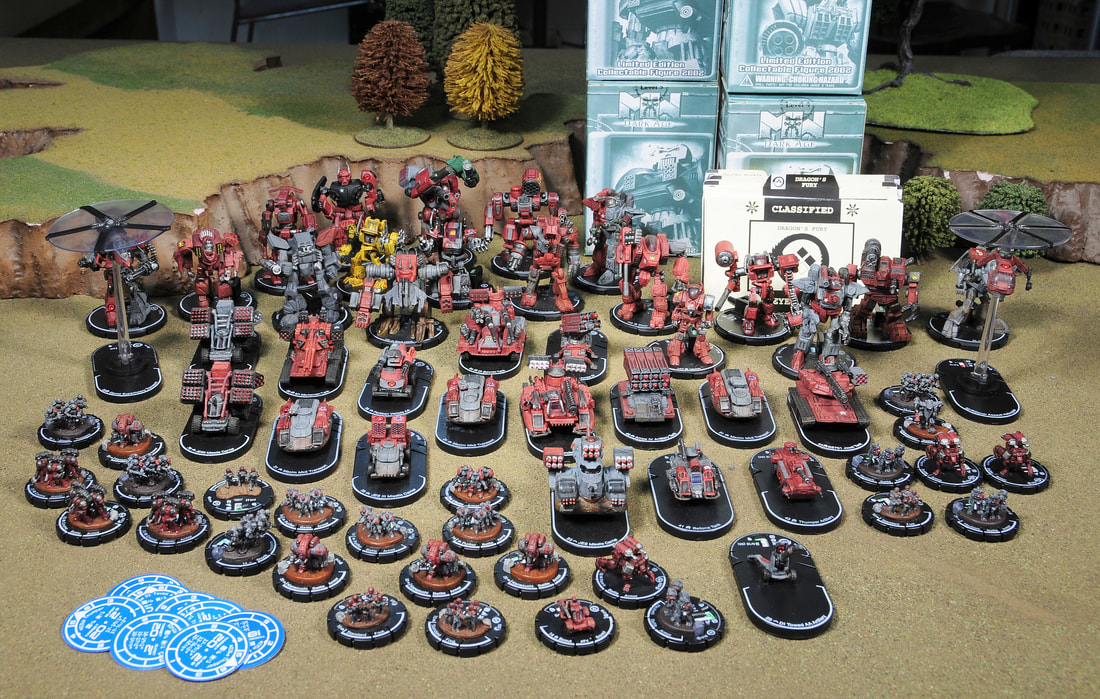
Featuring pre-painted miniatures in a new scale (N-guage or 15mm) incompatible with previous BattleTech minis, at first Wizkids tried to make Dark Ages a simplified version of the tabletop game, with many of the mechs capable of being easily converted to the classic rules. 
Picture
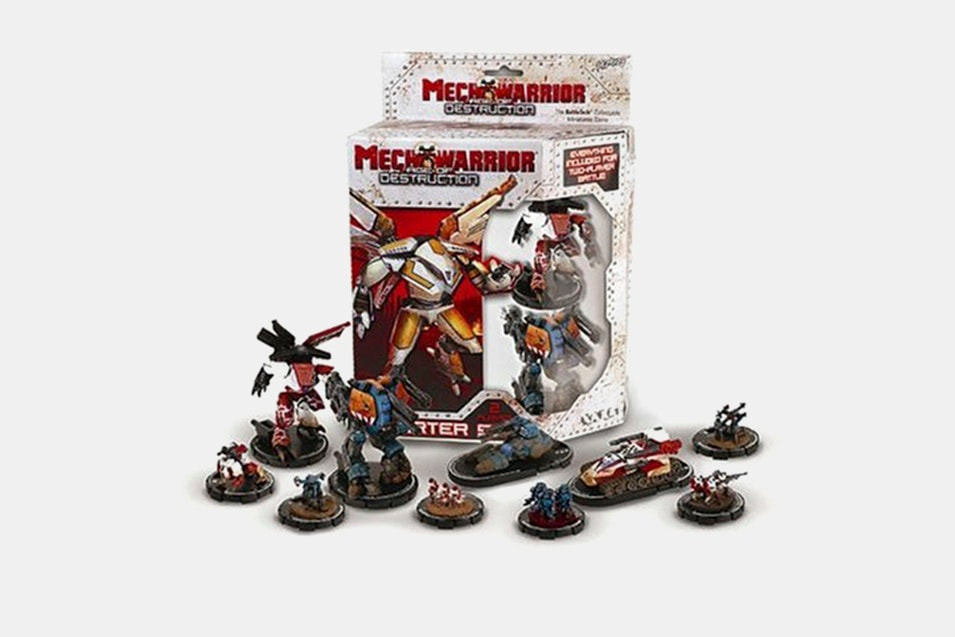
Dark Ages quickly found an audience and proved quite popular, however, the game didn't end up having a lot of crossover appeal with classic tabletop players, largely due to 60 year time jump in the associated game fiction, when the current Jyhad storyline was not even close to being resolved (more on this in the Fictional History of BattleTech series). Perhaps in recognition of this, by 2005 the game was re-subtitled "Age of Destruction" and a whole host of new rules were introduced, widening the gap between it and classic BattleTech. New mechs introduced after this point no longer conformed to the building rules of the original game. 
Picture
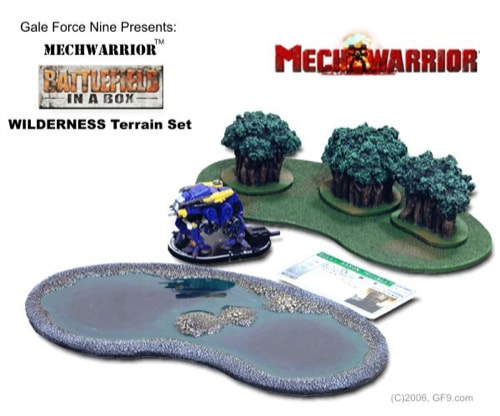
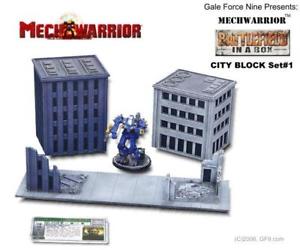
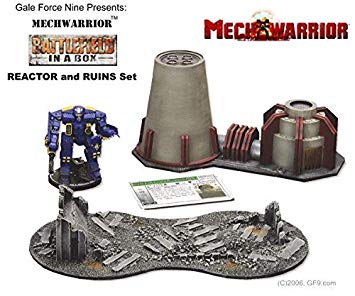
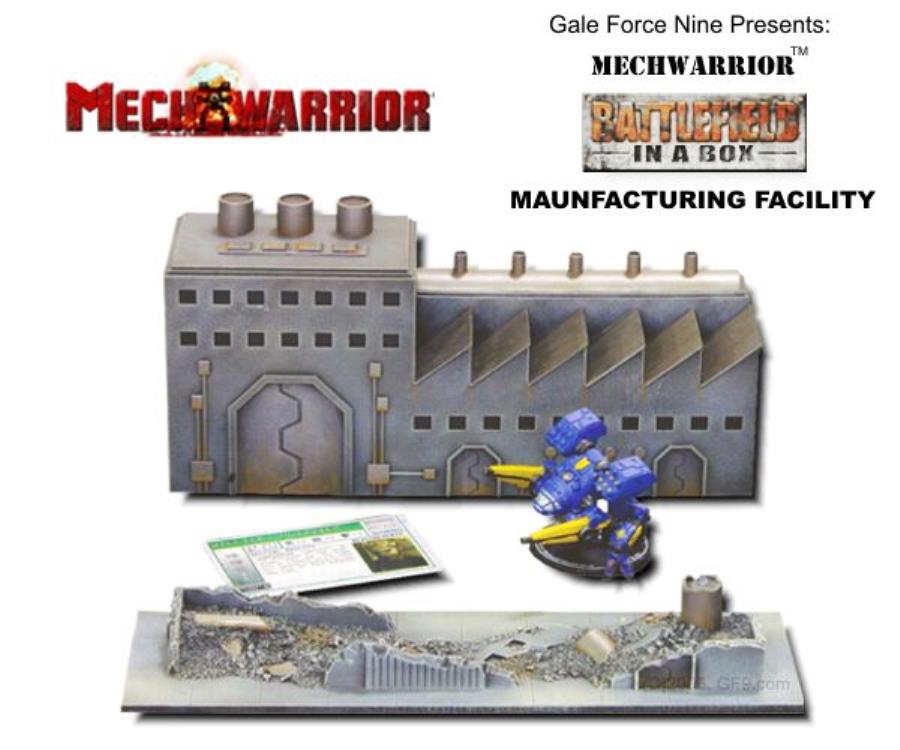
In cooperation with Gale Force 9, several "Battlefield in a Box" supplements were also produced for the game
Picture
Picture
Picture
Picture
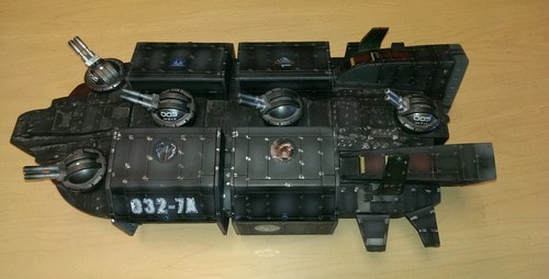
All in all, the Mechwarrior collectible miniatures game lasted until 2007, spanning 27 expansions. Perhaps the most impressive piece released during this time was a scale model of a dropship, still sought after today by collectors.
Picture
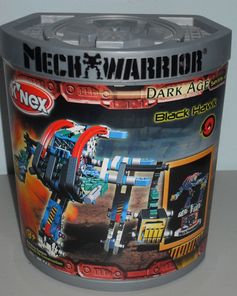
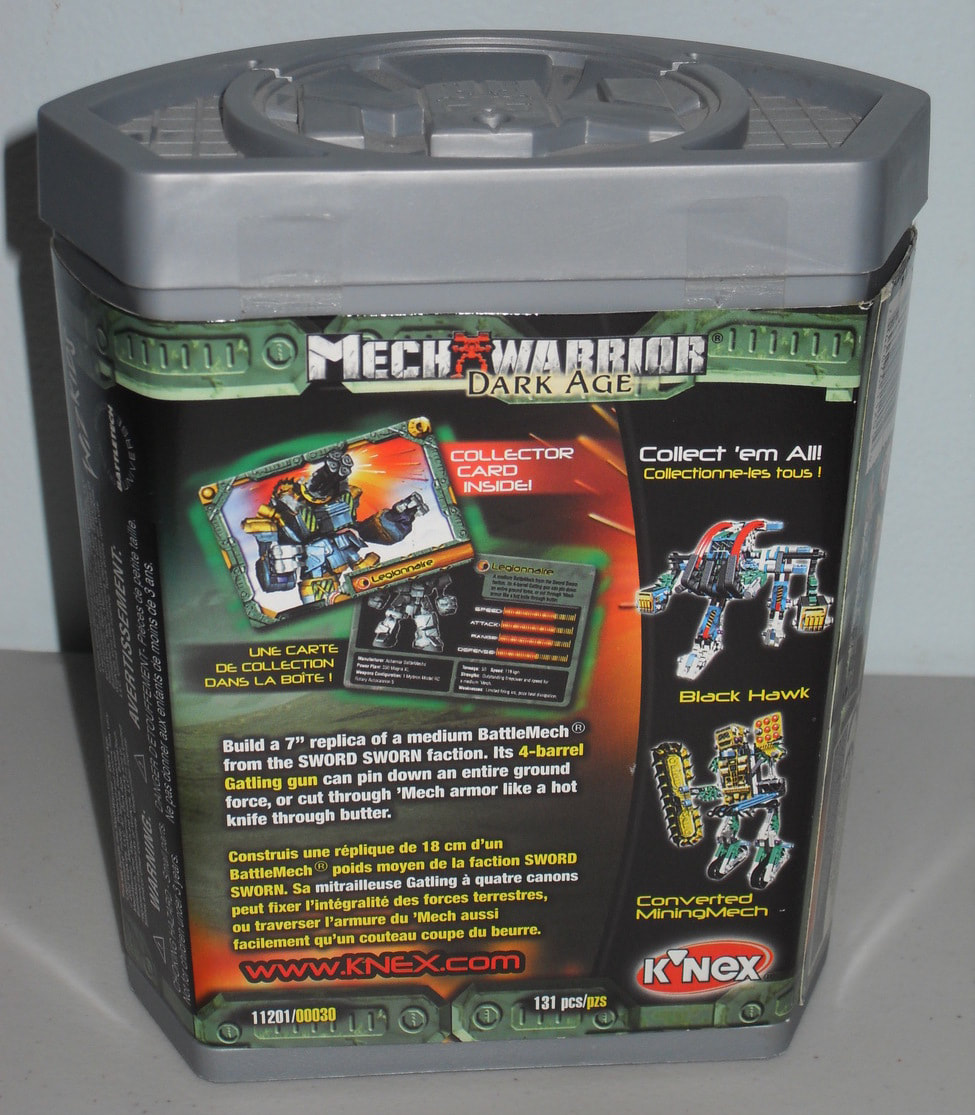
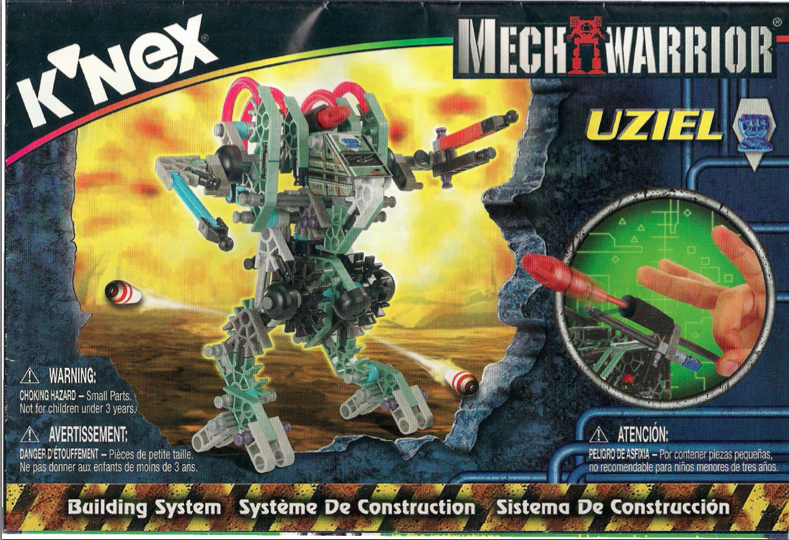
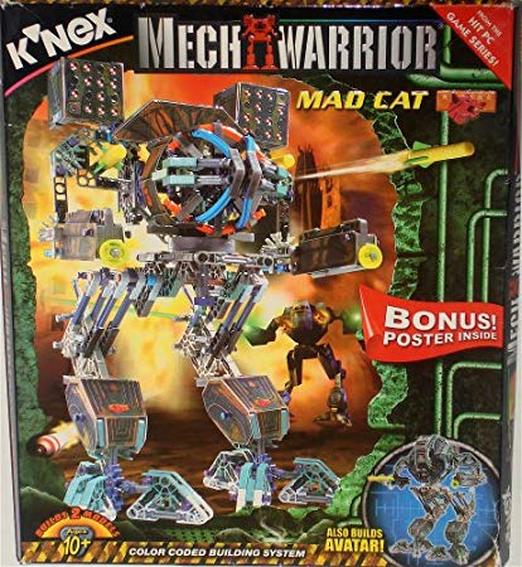
The backstory and continuing narrative of Dark Age/Age of Destruction played out over a series of 30 tie-in novels (more on that coming up). There were also some tie-in merchandise with K-Nex building kits, the first time BattleTech showed up on toy shelves since the Tyco line of the early '90s.
Picture
Picture
Picture
Picture
Picture
Meanwhile, the original tabletop game rules were licensed out by WizKids to FanPro...
0 Comments

BattleTech Real World History Part IV

9/2/2018

0 Comments

 
Buckle up me boyos, this one's going to be a doozy...
Picture
Playmates had partnered with FASA's old nemesis, Harmony Gold, to produce a new line of Robotech toys (these eventually were released as an expansion to the ExoSquad toyline). And when the judge in the lawsuit FASA brought against Playmates over their Exo-Squad line decided the similarities between the properties weren't enough and dismissed the case, Harmony Gold saw a weakness and pounced. Harmony Gold finally thought it had the leverage it needed and broke the long-standing stalemate by initiating a counter-suit against FASA. ​
Picture
Let me take a minute to talk some more about Harmony Gold. Hindsight, as they say, is 20/20, and some information has come to light in the years hence that give a clear picture as to the sort of company with which we are dealing. To quote from Wikipedia:

"On November 29, 2006, federal agents raided Agrama's home and offices in connection with Italy's ongoing tax fraud, embezzlement and false accounting investigation of its former Prime Minister Silvio Berlusconi. Court documents revealed the recent search by FBI agents centered on Italian allegations that Agrama, Berlusconi and others fraudulently inflated the price of television rights originally purchased by Agrama so that millions of dollars in kickbacks could be paid to executives of Berlusconi's Mediaset media empire.

On October 26, 2012, Agrama was convicted after a lengthy trial involving the buying and selling of US film rights to the Mediaset media company at inflated prices.[13] As his age exceeded 70 years, he was exempted from direct imprisonment and served no actual jail time. According to the Los Angeles Times, on November 21, 2006 prosecutors in Milan, Italy charged Agrama, along with Berlusconi and ten others, in a trial over tax fraud, embezzlement and false accounting at Mediaset.
 ...

In October 2011, Paddy Chan Mei-yiu and Katherine Hsu May-chun, along with nine others (including Frank Agrama and Pier Silvio Berlusconi, son of Silvio Berlusconi), were indicted by a Milan court and charged with buying rights for US television series and movies, then reselling them to broadcasting rights firm Mediatrade (a subsidiary of Mediaset) at inflated prices and laundering the money in a complex scheme. The four companies allegedly involved in this scheme were Wiltshire Trading, Harmony Gold, CS Secretaries and Loong Po Management.

According to prosecutors, Chan met Agrama in Cannes, France in the late 1970s at a trade fair and they decided to form a partnership to trade movie rights internationally. Chan organized a Hong Kong-based Harmony Gold Limited in 1979, records from the city's Companies Registry show. In the same year, Agrama organized Agrama Film Enterprises on Sunset Boulevard in Los Angeles. Four years later, he set up Harmony Gold. He later also became the Los Angeles representative of another Hong Kong company established by Chan, Wiltshire Trading.

Prosecutors estimated the illicit profits between 1988 and 1999 amounted to US$170 million. Earlier in 2005, Swiss investigators froze 150 million francs (HK$1.29 billion) at a UBS branch in Lugano belonging to Harmony Gold, Wiltshire Trading and other companies.

On July 24, 2014, Variety reported that some of the charges have been dropped due to expiring statute of limitations. An appeals hearing was set to take place January 20, 2016. On January 18, 2016, all charges against Frank Agrama and five other people were dropped. Berlusconi and Mediaset Chairman Fedele Confalonieri were convicted and were sentenced to 13 months of imprisonment
."
(https://en.wikipedia.org/wiki/Harmony_Gold_USA)
Picture
​Things were looking bad for FASA. While they'd purchased the rights to the Super Dimension Fortress Macross and Fang of the Sun Dougram mecha designs from Twentieth Century Imports a year earlier than Harmony Gold, HG had gone straight to the original creators, the Tatsunoko art studio, to secure their rights for Robotech. Losing the lawsuit could have devastated FASA financially. 

However, through a stroke of luck (i.e. a series of legal slip-ups) FASA’s lawyers got a hold of a number of letters during discovery that brought into question Harmony Gold’s sole ownership of the rights to Macross (https://www.eyrie.org/~robotech/hg-fasa/legal-3.txt). With the legal waters sufficiently muddied, Harmony Gold once again got cold feet, and offered to settle out of court. 

FASA settled with Harmony Gold in 1996. Unfortunately, by the terms of the settlement FASA could no longer use the mech designs originally based on Macross and Dougram. In one fell swoop, 32 classic mechs became...
Picture
I'm going to take a brief detour here before returning to our narrative to talk about ExoSquad. It's very easy, from the story as laid out from FASA's perspective, to see it as a notorious rip-off money grab. But I have mixed feelings about that. Because while Playmates may have taken advantage of FASA, it's also just as likely that they'd already been in talks with Harmony Gold regarding Robotech before FASA ever approached them and that was the reason they turned down the initial offer to do a BattleTech toy line. What I'm saying is, while Harmony Gold is without a doubt a den of scum and villainy, that doesn't necessarily mean that Playmates or the makes of the ExoSquad cartoon deserve any guilt by association.

But even more than that, the thing is, ExoSquad is a good cartoon.

Like...really good.

In fact, I'm not exaggerating for a moment when I say that, in my honest opinion, ExoSquad is one of the best American animated series of all time.

ExoSquad is to Saturday Morning Cartoons in the U.S. what Gundam was to the Super Robot genre in Japan. Together with Batman: The Animated Series , X-Men, and Mighty Max (I'll do a post on that one at some point), ExoSquad showed that cartoons ostensibly aimed at children could present mature themes, sophisticated continuing narratives, and deep characterization, potentially capturing an older audience. 

Set at the beginning of the 22nd century, after mankind had colonized the solar system, "terraforming" Mars and Venus to become inhabitable, XOS followed an elite group of mecha pilots defending humanity from the Neo-Sapiens. But things were much more complex than that. The Neo-Sapiens weren't alien invaders, rather a genetically engineered slave race that humanity created to assist with planet terraforming. Their attacks were basically a slave revolt. And the show didn't shy away from showing the morally grey area the protagonists inhabited. Over 2 seasons XOS depicted a war opera from beginning to end, with dozens of subplots and several smaller stories interwined in the narrative showing the effects on the war on individuals, and the ethical struggles of all of those involved. To make matters even more complex, the war eventually has a third participant, the "Pirate Clans", descendants of human criminals exiled from their homeworlds a generation ago. 

ExoSquad is everything the BattleTech animated series wasn't. And in a strange way, it's actually the closest thing to a good BattleTech cartoon we've ever seen.

​If FASA had won their initial lawsuit against Playmates, would that have killed the cartoon early? Who then would be painted the villains in retrospect I wonder? Extend this further to Robotech. Does the success of one need to mean the other can't exist simultaneously? The creative landscape of the '80's would have been a poorer thing for the loss of either Robotech or BattleTech. And I don't believe for one second the presence of BattleTech hurt Robotech or vice versa? I really don't think so.
Picture
The classification of mechs as "Unseen" meant that , while they continued to be represented in the fiction and game stats, all images of them were removed from BattleTech publications, and the associated miniatures were taken out of production. Among these, of course, was the iconic "Warhammer" that had graced the cover of the BattleTech boxed sets since Battledroids.
Picture
Other mechs deemed "Unseen" include
​The Archer, Battlemaster, Crusder,
Picture
Picture
Picture
Glass Spider, Goliath, Grand Crusader
Picture
Picture
Picture
Griffin, Hellhound, ​Howler
Picture
Picture
Picture
Incubus, Locust, ​Longbow
Picture
Picture
Picture
Marauder, Marauder II, ​Peregrine
Picture
Picture
Picture
Phoenix Hawk​, Raijin, ​Rifleman
Picture
Picture
Picture
Shadow Hawk, Stinger, ​Thunderbolt
Picture
Picture
Picture
...and the Valkyrie, Wasp, and Wolverine
Picture
Picture
Picture
The loss of these mechs were devastating for many fans who grew up with them as a huge part of the game or in some cases, the reason they were attracted to BattleTech in the first place. Yet, I think nothing says more for the unique identity that BattleTech carved for itself that it continued to move forward and thrive even with this incredible blow. Sure, it meant that many classic sourcebooks and gaming materials were discontinued and could no longer be reprinted, but FASA continued on without skipping a beat...

​until they didn't...
0 Comments

BattleTech Real World History Part III

9/1/2018

0 Comments

 
Picture
​In 1994 the BattleTech animated series premiered. Produced by Saban Entertainment, the cartoon was noteworthy as being the first syndicated series to blend traditional animation techniques with CGI. The main character was Adam Steiner, and the 13 episode run focused on the liberation of his home planet of Somerset from invading Clans. It played very fast and loose with BattleTech lore, as one might expect. 
Picture
The series was, frankly, not very good. One can find the episodes on YouTube if curious, but I don't recommend it. 

In 1995 FASA published a tie in gaming product, 1st Somerset Strikers, that was meant to be a gateway product for hypothetical "fans" of the series (I guess theoretically they could exist...).
Picture
​Besides game stats, scenarios, and an episode guide, the book took on the ambitious attempt to address the contradictions of the series with established Battletech canon.

Additionally, a 5 issue (including issue #0, because '90s) tie-in comic book series inspired by the cartoon was published by Malibu Comics from '94-95, the first BattleTech comics since the Blackthorne series.
Picture
However, as far as merchandising tie-ins, by far the most important was the BattleTech toy line. Little did anyone know that this would indirectly change the course of history for the BattleTech gameline and universe forever...
Picture
FASA originally approached Playmates with the idea for a BattleTech-themed gameline, along with supporting design sketches, but Playmates eventually turned them down. Tyco Toys instead picked up the license and the first wave of BattleTech action figures was introduced in '94.
Tyco, though not one of the bigger toy companies in the U.S., had been around since 1926, and primarily focused on toy trains and R/C vehicles. In the '80s their first major license was for Sesame Street toys, aimed at a much younger audience. BattleTech was Tyco's most ambitious attempt to penetrate the action figure market. 
Picture
​Series I included five mechs, one Aerospace fighter and three combat armors. Each mech and vehicle came with a 2 3/4" pilot from the animated series. 
Picture
​The mechs featured "battle-damage" panels, so children could aim and fire their spring-loaded projectiles at the panels (and their eyes), having the mech toy react with ejecting the pilot or limbs. 
Picture
Picture
Picture
Tyco's 1994 catalogue included 4 pages of advertisements for the BattleTech toys, notable as they clearly show prototypes differing slightly from the toys released.
Picture
Picture
Picture
Picture
They Tyco toys, for as big as they were, lacked a lot of detail. That may of course be an unfair comparison from a mass-marketed toyline primarily intended to stand up to the rigors of play vs the miniatures designed for painting by hobbyists, of course. But the action feature was fun (and surprising that they managed to get it past the toy safety commission, as "firing" weapons on toys had been a No-Go in the states since a young child choked to death on a Battlestar Galactica missile in the early '80's). 
​A 2nd series was released in '95, though it mostly consisted of repaints of the originals
Picture
Unfortunately, a toyline's health is directly tied to the success of the associated animated series providing half hour advertising to it's audience, and the BattleTech cartoon failed to capture an audience. Likely mostly do to it's quality (or lack thereof, but also largely because it suffered from some rather specific competition (more on that in a bit). The toys were cancelled after the series II releases, with several prototypes never making it to market, such as these previewed in Toyfare magazine...
Picture
That's right, including a goddamn ATLAS!
We could have had an Atlas toy! And it looked awesome. It's a cruel world we live in...

Anyhow, that "competition" that I mentioned previously? That would be ExoSquad. Created for syndication by Universal Cartoon Studios, Exosquad (henceforth XOS) was a direct reaction to anime, and followed a very familiar premise: fighters in mecha-like "exo-skeletal armour" fighting an intergalactic war in the far future. 
Picture
Hup ye boy ye, what's that you say? Some of those designs look a wee bit familiar?

Would it help to know that the associated toyline for ExoSquad came from none other than Playmates?
Picture
(pictured above, Exo-Squad's "Heavy Attack E-Frame"; below, BattleTech's "MadCat")
Picture
The similarities were a bit more than coincidental, and FASA sued. Unfortunately...
Picture
0 Comments

    PLOG OF THE HORNED RAT

    In which The Shadowy Mr. Evans engages his obsession for painting tiny metal figures

    SKAVEN BLOGROLL

    Chequeo de liderazgo
    Full Ashtray Gaming
    Snickit's Tail
    Mark Raley Miniatures
    Goblin Lee's
    Comrade's Wargames

    ARCHIVES

    February 2024
    January 2024
    March 2023
    November 2022
    January 2021
    September 2020
    August 2020
    April 2020
    November 2019
    September 2019
    April 2019
    November 2018
    October 2018
    September 2018
    August 2018
    February 2018
    January 2018
    December 2017
    November 2017
    October 2017
    June 2017
    May 2017
    April 2017
    November 2016
    September 2016
    April 2016
    January 2016
    December 2015
    November 2015
    October 2015
    June 2015
    May 2015
    March 2015
    February 2015
    January 2015

    Categories

    All

    RSS Feed

Powered by Create your own unique website with customizable templates.